
Last updated November 23, 2026
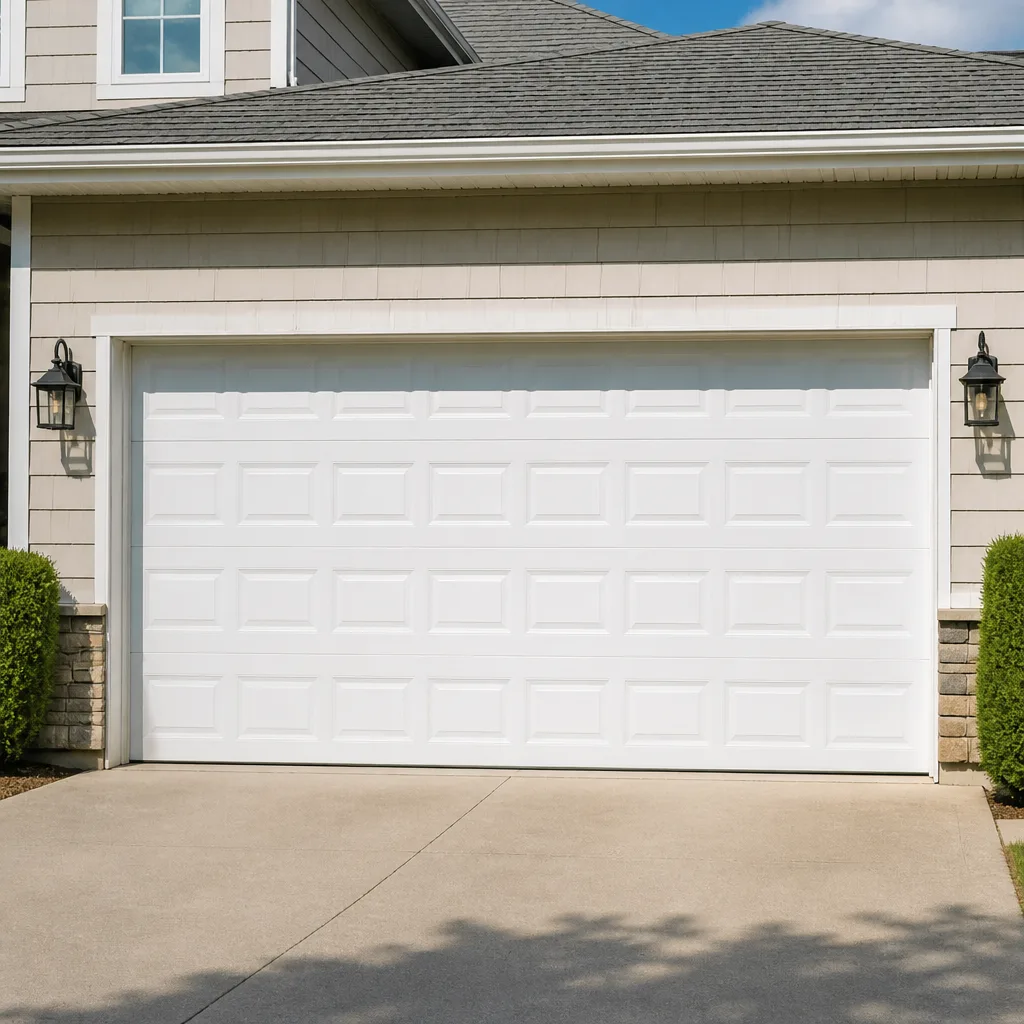 Raised-panel steel
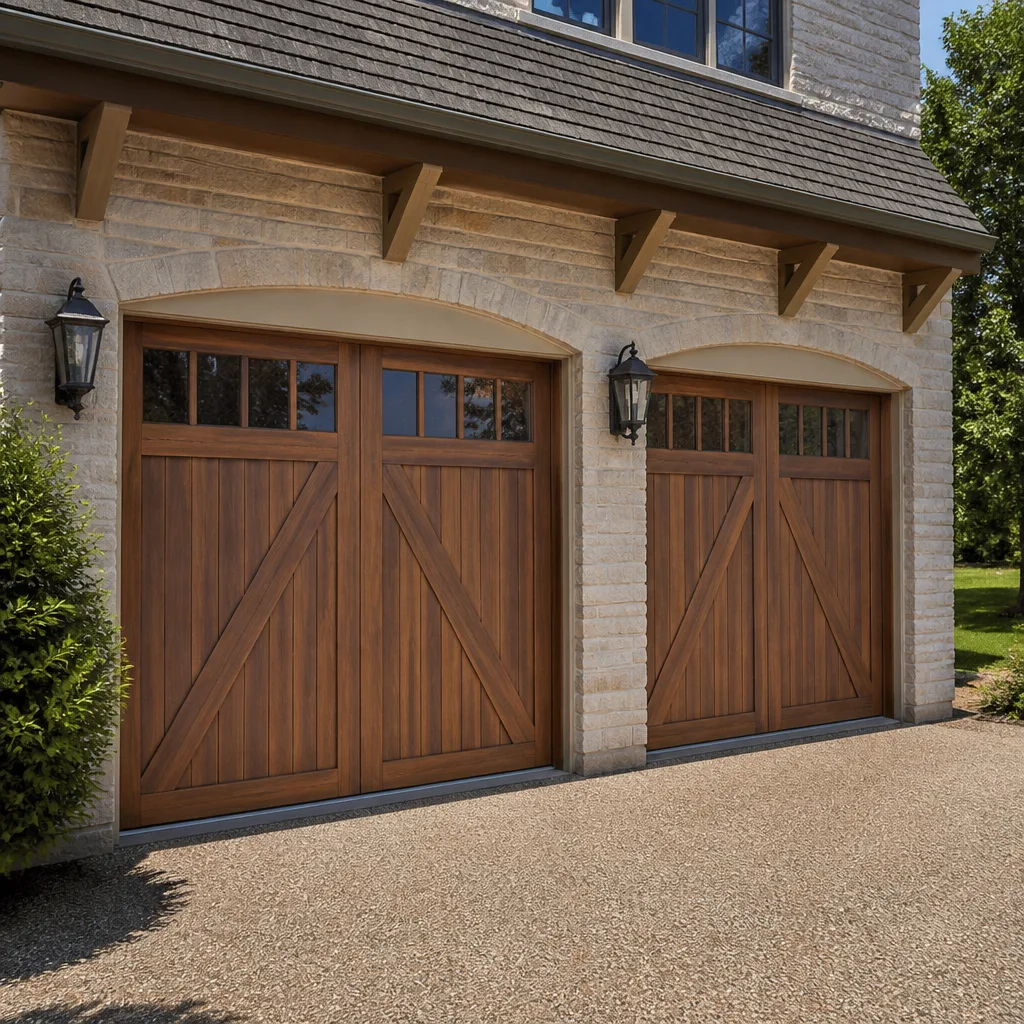 Carriage house
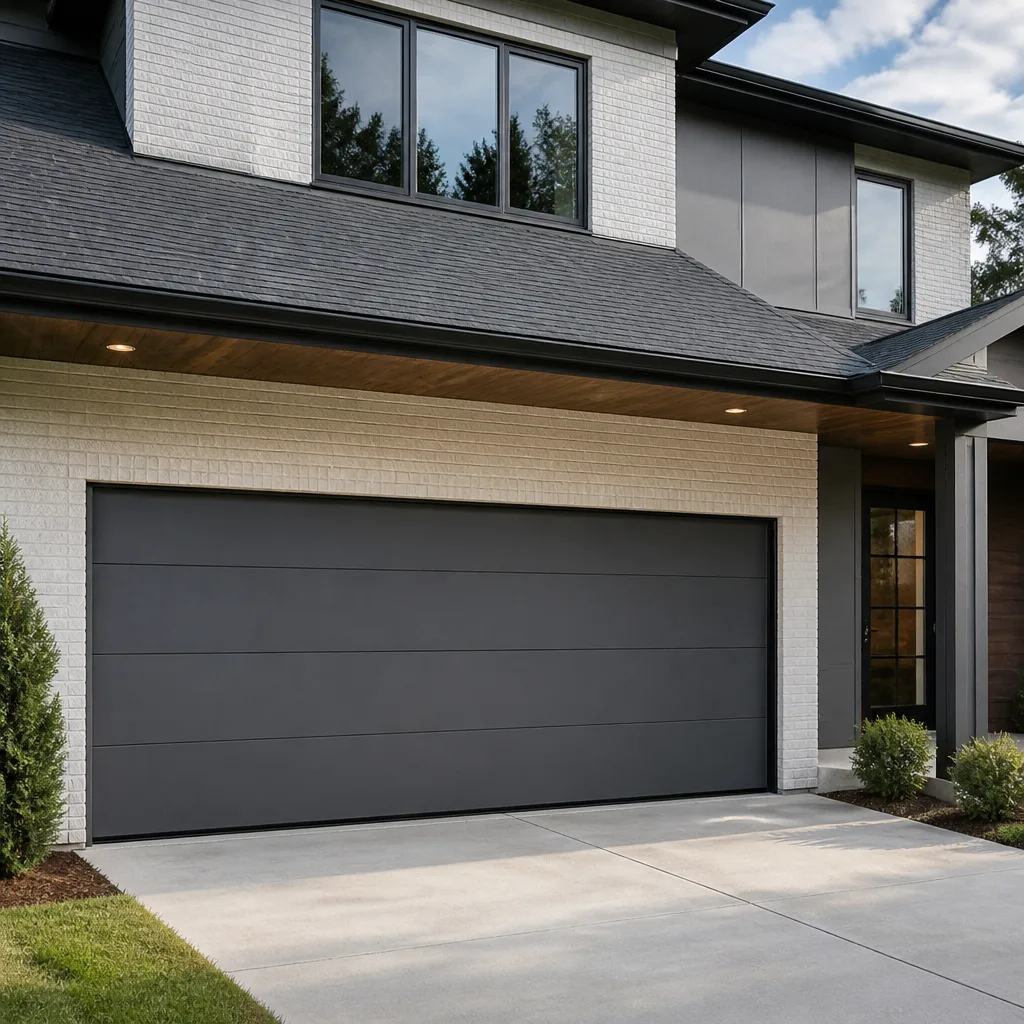 Modern flush
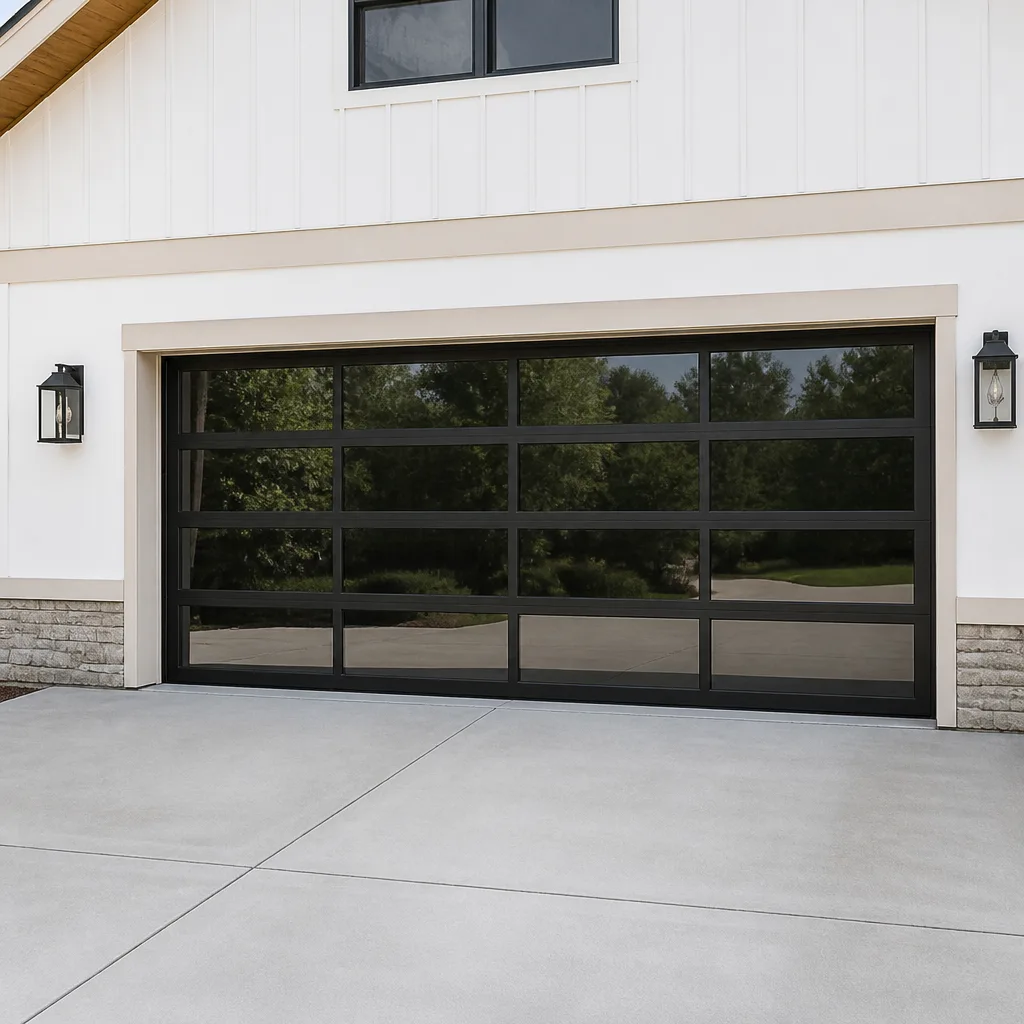 Full-view glass
 LiftMaster openers
 Chamberlain openers
Full 25-point door and opener safety check with every visit - springs, cables, rollers, tracks, and your LiftMaster or Chamberlain opener included
You get a price before we start. It does not change when the pro arrives.
Get your free estimateGarage Door Repair Maintenance Schedule: What to Do and When
Lubrication in January is close to useless. Most lubricants applied to cold metal in an unheated Evanston garage don’t penetrate properly – they sit on the surface, stiffen, and attract grit. The homeowners who get years of service out of a torsion spring before it snaps are rarely the ones doing more work. They’re the ones doing one specific task every October, plus a short check when the ground thaws in spring. This guide lays out a season-by-season schedule built around when garage doors in Evanston actually fail, not around a generic annual checklist. You’ll learn which tasks matter, which are a waste of time, and what a 20-minute maintenance routine twice a year genuinely buys you.
Quick Answer
A garage door needs two short maintenance sessions a year: a pre-winter tune-up in October that focuses on lubrication, weather seals, and a manual balance test, and a post-thaw inspection in March or April that catches what frost heave and freeze-thaw movement have done to the hardware. Add a five-minute monthly visual check, and that’s the whole schedule. Everything else – spring replacement, opener diagnostics, panel repair – is professional work that maintenance is meant to postpone, not replace.
Styles & brands we work with
- Raised-panel steel
- Carriage house
- Modern flush
- Full-view glass
- LiftMaster openers
- Chamberlain openers
Table of Contents
- Why Evanston’s Climate Sets the Schedule
- The October Task That Prevents Spring Failures
- The Manual Balance Test: The One Check Most Homeowners Never Run
- Winter: What to Check and What to Leave Alone
- Post-Thaw Inspection: What to Look For in Spring
- Summer Humidity Checks
- Which Lubricants Go on Which Parts
- What a Technician Checks That You Can’t
Why Evanston’s Climate Sets the Schedule
Garage doors don’t fail on a calendar. They fail when the material conditions that hold them together change – and in Evanston those conditions change hard, twice a year.
A garage door is mostly metal, and metal moves with temperature. A standard two-car steel door in an unheated Evanston garage can swing through a temperature range of well over a hundred degrees between a January cold snap and a July afternoon. That movement runs through the torsion spring, the cables, the hinges, and the track. Freeze-thaw cycles are the part most maintenance guides skip. When moisture works into a hinge pin or a track fastener and then freezes, it expands. Repeat that cycle enough times and a joint that was snug in October is loose by March.
The lake doesn’t help. Evanston’s proximity to Lake Michigan moderates temperatures, which sounds good until you realize it means more freeze-thaw days than a colder inland suburb gets. A colder town freezes and stays frozen. Evanston thaws, refreezes, and thaws again – and each cycle works the hardware a little looser.
That’s why the standard “check it in the spring” advice is only half a schedule. The other half lives in October, before the ground freezes and the first hard cold locks everything in place. A door that gets a proper fall tune-up goes into winter with clean, correctly lubricated moving parts. A door that doesn’t goes in dry, and dry metal under tension is where you find problems in February.
The neighborhoods matter too. Older housing stock around the lakefront and downtown tends to have heavier wooden or insulated steel doors with original hardware, which needs more attention to hinge and track condition. Newer builds on the west side of Evanston often have lighter doors with modern openers – less hardware to maintain, but more electronics to check. Either way, the seasonal rhythm is the same.
The October Task That Prevents Spring Failures
The single most valuable maintenance task on a garage door happens in October, takes about ten minutes, and most homeowners have never heard of it: clean and lubricate the torsion spring and the track hardware before the cold sets in.
Here’s why it matters. A torsion spring’s job is to carry the door’s weight so the opener only has to lift and lower it, not fight gravity. It does that by twisting. Every twist stresses the metal, and every cycle of the door is one twist and one release. A door that cycles four times a day takes around 1,500 cycles a year. Springs are rated in cycles, and the ones in your garage have a finite number. The question is never whether the spring will eventually fail. It’s whether it fails cleanly on a warm day when you’re home, or breaks at a bad moment.
Lubrication doesn’t extend the cycle count. What it does is reduce friction against the spring and the hardware it rides in, so each cycle runs a little smoother and a little cooler. Cold metal that’s dry runs dry. Cold metal that’s been given a proper coat of the right lubricant in October runs with less resistance through the whole winter. In our experience, springs that get a fall lubrication and a balance check each year tend to reach their cycle life slowly instead of snapping unexpectedly.
The October routine, in order:
- Spray a proper garage door lubricant on the torsion spring coils. Use a lubricant specified for garage door springs – a clean, non-gumming spray. Don’t use WD-40 or a general-purpose penetrating oil. See the lubricant section below for why.
- Wipe and lightly lubricate the track. A clean rag and a light coat of silicone-based spray on the vertical and horizontal track. Not on the rollers – we’ll get to that.
- Lubricate hinges and roller stems at the pivot points. One drop or a short spray at each hinge pin, using white lithium grease or a garage door specific spray.
- Check the weather seal along the bottom of the door. Run your hand along it. If it’s cracked, brittle, or no longer making contact with the floor, it needs replacing before winter. A failed seal lets cold air and moisture into the garage, and in Evanston that moisture is what freezes you out of a smooth opening in January.
- Look at the rollers. Steel rollers in a warm climate last reasonably well. In a freeze-thaw climate they wear faster and get noisy. Nylon rollers hold up better to temperature swings. If yours are steel and screeching, that’s a sign.
- Run the manual balance test – covered in detail below.
That’s the whole October session: ten to fifteen minutes with a can of the right lubricant and a rag. It is the highest-value maintenance you can do, and the calendar reason it happens in October is that once the temperature drops, metal contracts, lubricants stop flowing properly, and you can’t get an even coat on anything.
The Manual Balance Test: The One Check Most Homeowners Never Run
If you only do one thing from this entire schedule, do this. The manual balance test tells you whether your garage door’s spring system is still doing its job – before it stops doing it entirely.
Here’s how it works. A properly balanced door has its spring tension matched to the weight of the door. When you disconnect the opener and lift the door by hand to about waist height, then let go, a balanced door stays put. It floats there, or drifts just slightly. An unbalanced door does one of two things: it drops fast because the springs have lost tension, or it rises on its own because the springs are wound too tight.
The test, step by step:
- Close the door fully. Make sure the opener is disengaged using the manual release cord. Most openers have a red T-handle that disconnects the carriage from the opener rail.
- Lift the door by hand to about waist height, slowly and firmly. You’re not lifting the full weight – the springs should be doing most of the work. If you’re straining, stop. That’s your answer, and it means the springs aren’t supporting the door properly.
- Let go. Don’t push it. Just release and watch.
- Watch what happens. Balanced: the door stays roughly in place. Unbalanced: it drops or rises on its own.
- Re-engage the opener by running it until the carriage reconnects, usually by moving the door manually to the correct position or cycling the opener.
Do this test in October and again after the thaw. If the door fails the test – it drops, rises, or feels heavy at the top – the spring is the usual suspect. A torsion spring loses tension gradually before it fails, and the balance test catches that loss long before you hear the bang. Springs carry hundreds of pounds of tension. Once the balance test tells you something’s off, you stop testing and get a trained technician to look at it. Do not try to adjust the spring tension yourself. That’s the most mechanically dangerous repair on a garage door, and it’s the reason garage door spring repair exists as a specialist job.
The balance test is also a useful gut check on the springs’ overall health. A door that used to float at waist height and now wants to creep down is telling you the spring is losing tension. You’ve got warning. Use it.
Winter: What to Check and What to Leave Alone
January and February in Evanston are not the season for maintenance that requires lubricant to flow, adjust to be made, or springs to be inspected closely. Cold metal is brittle, lubricants stiffen, and any task that involves the spring is best left alone. What you can do in winter is watch and listen.
The winter checklist is short and passive:
- Listen to the door. A new grinding, popping, or scraping sound that wasn’t there in November is a signal. Note it. It’ll be a hinge, a roller, or the track.
- Watch for a door that reverses unexpectedly. If the door starts going up, then reverses back down partway through, or stops halfway, the opener’s safety sensors are getting tripped – often because the cold has stiffened a weather seal, or a sensor has frosted over.
- Clear the safety sensors. The two eyes at the base of the track, about six inches off the floor. If snow, ice, or a stray leaf is blocking one, the door won’t close. A soft cloth and a quick wipe is usually all it takes.
- Keep the bottom seal clear of snow. A packed drift against the bottom of the door won’t stop it opening, but it will bind the door as it tries to close, and repeated strain shortens the opener’s life.
- Check the opener’s manual release works. You’ll want that cord in a power outage. Give it a pull when the door is closed to confirm it engages and disengages cleanly.
What not to do in winter: don’t apply lubricant that was stored in a cold garage – it won’t flow evenly and you’ll create a sticky, grit-trapping mess. Don’t adjust springs. Don’t fully remove and regrease the hinges. And don’t run the balance test if the door feels unusually stiff – cold stiffness can make a healthy door feel unbalanced. Run the balance test in the fall before the first freeze, or wait for spring. If something’s broken in January, that’s a call for garage door repair, not a maintenance task.
Post-Thaw Inspection: What to Look For in Spring
March and April in Evanston are when the garage door’s bill for winter comes due. Freeze-thaw cycles have been working on the hardware since November, and the ground is moving under the concrete slab the track is anchored to. This is the inspection that catches what the fall tune-up couldn’t prevent.
Work through this in order, with a flashlight and a rag:
- Run the manual balance test. You already know it from October. It’s the fastest way to tell whether the spring came through winter intact.
- Check the track alignment. Stand at the door and look along the vertical tracks. They should be straight and plumb. A track that’s bowed, kinked, or has pulled away from the wall at a bracket is a real problem – and in Evanston, frost heave under the slab is one of the common causes. A slightly out-of-line track will wear the rollers fast.
- Check hinge fasteners. With the door closed, hold each hinge and try to wiggle it. Loose hinges are a fall and winter product – the fasteners work themselves out under repeated cycles and temperature movement. Tighten what’s loose with the correct driver, gently. Don’t overtighten into wood that’s already been chewed.
- Look at the rollers. Worn rollers are scored, flat-spotted, or won’t turn freely. Nylon rollers in a freeze-thaw climate sometimes crack in cold weather. Steel rollers develop flat spots. If they’re bad, replacement is a straightforward repair job.
- Examine the cables. Look for fraying, kinks, or rust at the drum ends. Cables are under tension and a frayed cable can snap. If you see fraying, that’s a technician call, not a maintenance task.
- Inspect the bottom seal and the perimeter weatherstrip. Winter cold, ice, and snow damage seals. A split seal needs replacing before summer rain – water infiltration on the garage floor is one of the ways slab heave starts.
- Check the springs visually. You’re looking for rust, cracks, or gaps in a torsion spring’s coils.
- Test the opener’s safety reverse. Place a 2×4 flat on the floor under the closing door. The door should reverse when it contacts the board. If it doesn’t, the opener’s down-limit or force setting has drifted, and that needs attention. Older Genie and Craftstman units drift more than newer openers, in our experience.
The spring inspection in spring is worth doing because a spring that’s survived the winter is the one that will fail in the summer if it was weakened. If the balance test or the visual inspection raises a flag, get it looked at. Garage door opener repair and spring work are the two most common calls we take after the thaw, and both are usually quicker to fix early than to wait on.
Summer Humidity Checks
Evanston summers are humid, and humidity is the quiet maintenance factor that most schedules skip entirely. Cold-weather problems announce themselves – a door that won’t open, a spring that snaps. Summer problems are slower: rust, swelling, and stuck hardware.
The summer checklist takes about ten minutes:
- Look for rust on hinges, tracks, springs, and fasteners. Humidity plus an unheated garage is a rust recipe. A light coat of lubricant on the affected parts slows it. Rust on a torsion spring is a warning sign – a spring that’s visibly rusty has been losing strength, and the balance test is worth running.
- Check the door panels for swelling or warping. Wooden doors swell in summer humidity. A door that fits in October sometimes binds in July. If the door is harder to close in summer than in winter, the panels may be swelling. That’s usually a sign the door needs adjustment or a hinge is binding.
- Re-lubricate if you skipped the fall. If the October tune-up didn’t happen last year, summer is a fine time to catch up – warm metal takes lubricant well.
- Clear the track of grit. Summer means dust, pollen, and grass clippings blown into the garage. Wipe the track down with a dry rag and a light silicone spray.
- Check the opener’s remote and wall console batteries. Summer heat can shorten battery life in remotes stored in a hot car. Weak batteries are one of the most common “my opener is broken” calls that turn out to be nothing.
Humidity also affects the bottom seal. A seal that’s soft and tacky in July will crack when the temperature drops again, so summer is a reasonable time to check whether it’s still doing its job. Any Clopay or Amarr door we see with an original bottom seal that’s past its life usually needs a replacement seal rather than a new door – a small repair that saves a bigger one.
Which Lubricants Go on Which Parts
Using the wrong lubricant is the most common maintenance mistake we see. It’s also the one that causes the most damage – and it’s the one that a bottle of WD-40 on a garage shelf is responsible for more often than anything else.
WD-40 is a light penetrating oil, not a lubricant. It’s fine for freeing a rusted bolt. On garage door rollers, it’s a mistake. It’s thin enough to migrate away from the roller stem and the hinge pivot, and it attracts grit – which then grinds against the metal every cycle. Spraying WD-40 on rollers is a maintenance habit that accelerates wear over time. Same story for hinges: WD-40 will quiet the squeak for a week, then the part runs dry and louder. Use it to unstick something and then apply the right product.
Here’s the right product per component:
- Torsion spring and extension springs: a garage-door specific spray lubricant, or a light machine oil. One even coat over the coils. Not WD-40, not heavy grease.
- Hinges and pivot points: white lithium grease or a garage door specific spray. A drop or short spray at each pivot. White lithium holds up better to temperature swings than a thin oil.
- Rollers – specifically the stems, not the roller surface: a light oil or a dry lubricant on the stem where it turns in the bracket. Do not oil the roller surface itself. The roller is meant to run on the track with steel or nylon touching steel, not on an oil film. Oiled roller surfaces pick up grit and wear the roller and track faster.
- Track: silicone spray, applied lightly with a rag. Not grease – grease on track collects grit and dust.
- Opener drive screw or chain: if your opener has a chain drive, most chain drives come pre-lubricated and don’t need additional lubricant. Belt and screw drives need even less. Check your opener’s manual before adding anything to the drive. If you can’t find the manual, don’t lubricate the drive. A worn drive is an opener repair matter, not a lubrication one.
One note on brands. LiftMaster and Chamberlain openers – the two most common on doors across Evanston – have their own recommended maintenance schedules in the manual. If you’ve got a Genie or a Wayne Dalton door with a LiftMaster opener, the opener manufacturer’s manual is the one to follow for the opener, and the door manufacturer’s spec for the door. Both are usually findable online by model number.
What a Technician Checks That You Can’t
A homeowner maintenance routine and a professional service visit overlap by maybe half. The other half requires tools and training you don’t have, and it’s the half where the real wear shows up.
As a homeowner, you can do the fall and spring tune-ups, the balance test, the seal checks, and the lubrication. You can do the winter listening and the summer rust check. That’s about 20 to 30 minutes of work a year, and it earns out – it’s the routine that keeps a door from failing on you.
A technician, on a professional service visit, adds:
- Precise spring tension measurement. The balance test tells you whether the spring is doing its job. It doesn’t tell you how close to failure it is. A technician can measure the tension and the spring’s remaining cycle life, which is the difference between “your spring is fine” and “your spring has about two years left.”
- Track and cable measurement. The small misalignments a homeowner can’t measure with a level. A track that’s off by a fraction of an inch is invisible but still wears the rollers.
- Opener electronics diagnostics. The force settings, travel limits, and photo-eye alignment. A mis-set force setting is invisible until it damages something, and it’s one of the more common causes of a door that reverses unpredictably.
- Safety reverse calibration. The 2×4 test tells you if the reverse works. A technician confirms it’s set correctly for your door’s weight, which can drift the same way the springs do.
- Panel and structural check. Bent panels, cracked glass, sagging sections, and frame attachment. This is the part that turns a small repair into a new door if it’s not caught early.
The takeaway is practical: the homeowner routine is preventive maintenance, and the technician visit is diagnostics and preventive repair. They’re not substitutes. A door that gets the fall and spring check every year and occasionally sees a technician will usually outlast one that gets neither. And a door that fails the balance test should see that technician immediately – not in October.
Common Mistakes to Avoid
- Lubricating in January. Most lubricants won’t flow properly onto cold metal, so you end up with an uneven coat that stiffens and attracts grit. Do the lubrication in October, before the cold sets in, and check rather than lubricate during the winter.
- Spraying WD-40 on rollers and hinges. It’s a penetrating oil, not a lubricant. It quiets a squeak for a week, then runs dry and leaves a grit-attracting residue. It accelerates wear over time.
- Oiling the roller surface instead of the roller stems. The roller is supposed to be metal-on-metal or nylon-on-metal in the track. Oiled roller surfaces collect grit and wear the roller and the track faster than a dry surface would.
- Skipping the balance test. It takes 30 seconds and it’s the earliest and clearest warning you’ll ever get about a failing spring. It’s also the one check most homeowners have never run – which is why spring failures so often come as a surprise.
- Trying to adjust spring tension or replace a spring yourself. Springs store hundreds of pounds of tension. The tools are specialized, the tension release is the dangerous part, and it’s the reason spring work is the one maintenance task we tell every homeowner not to attempt. This isn’t about being cautious – it’s about real injury risk from a twisted metal rod under load.
- Ignoring the bottom seal. A failed seal lets water in. In an Evanston garage, water under the slab plus freeze-thaw is one of the faster routes to track misalignment. Replacing a seal is cheap. Replacing a track isn’t.
- Running the balance test after pulling the spring free instead of re-engaging the opener. A door run manually without properly re-engaging the release cord can bind and damage the opener carriage. Re-engage and test again.
See the difference
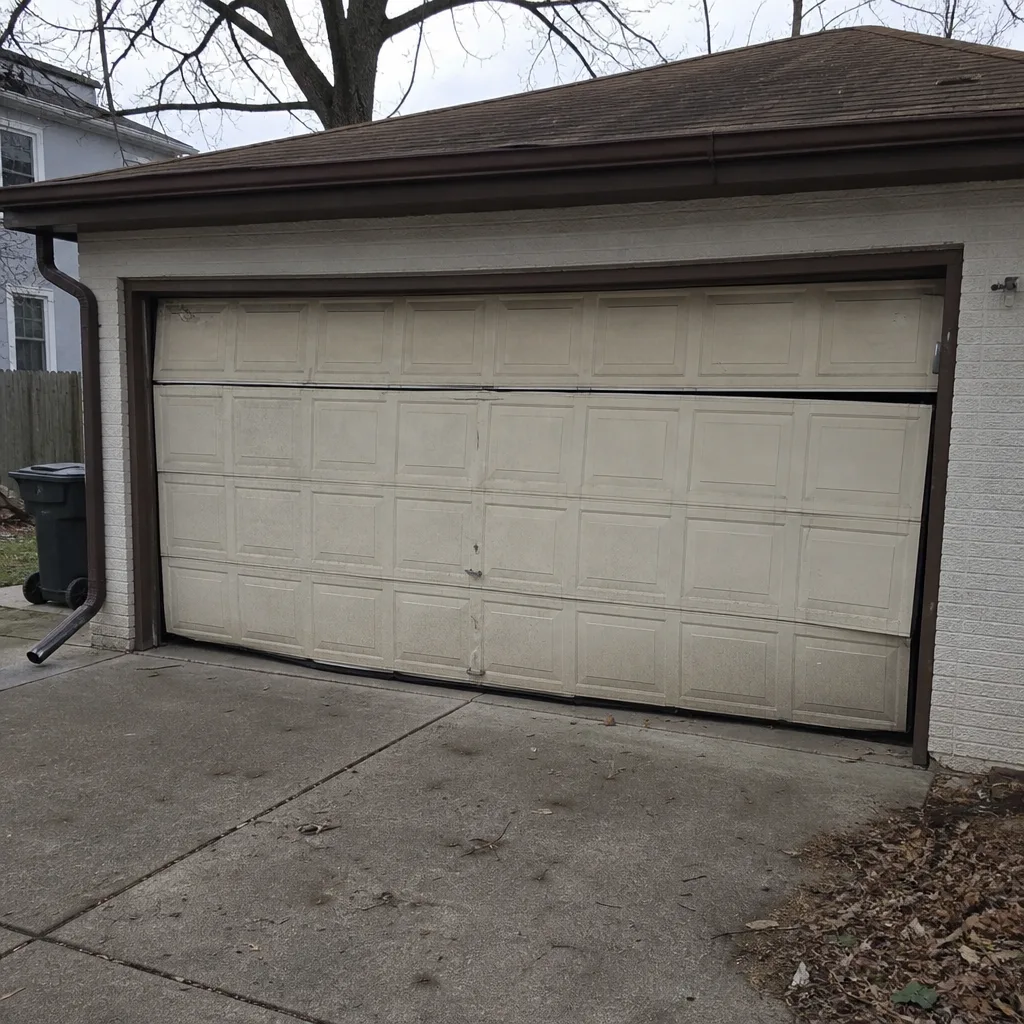 Before
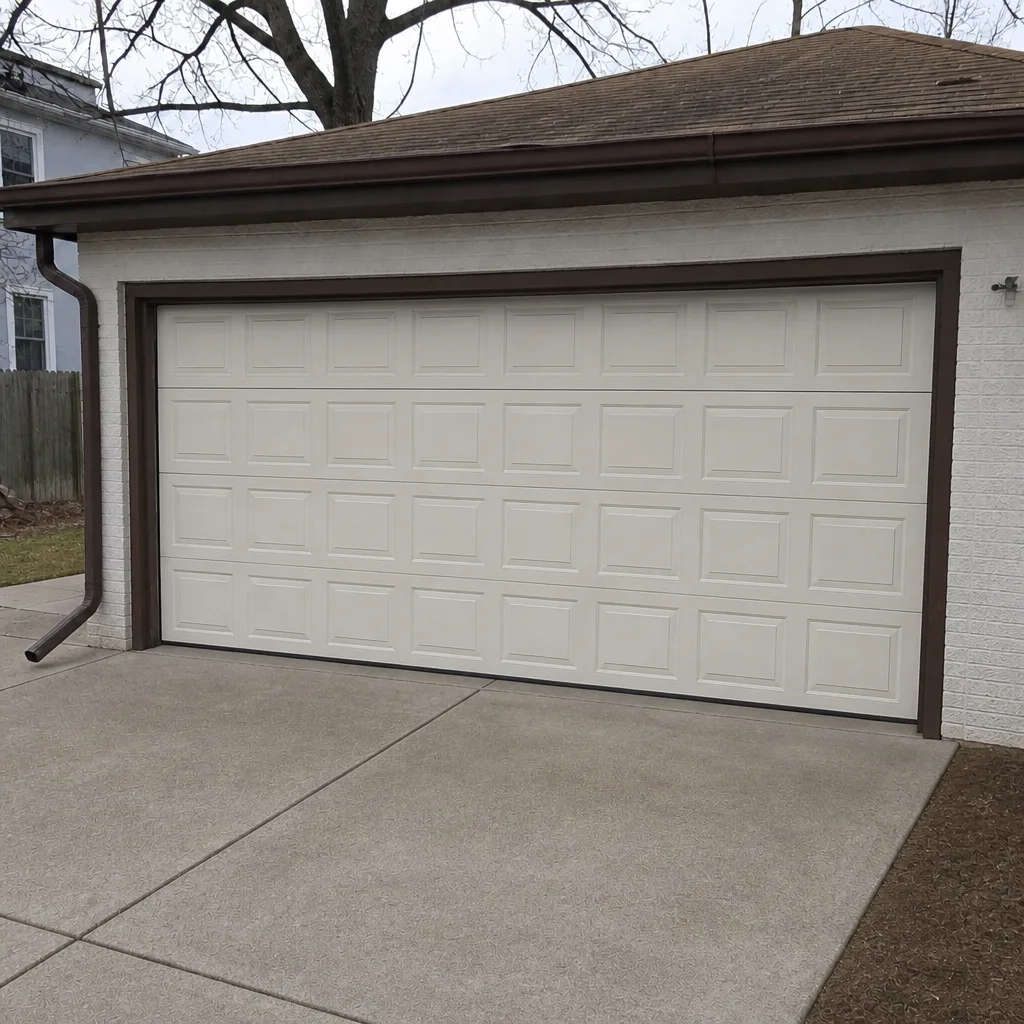 After
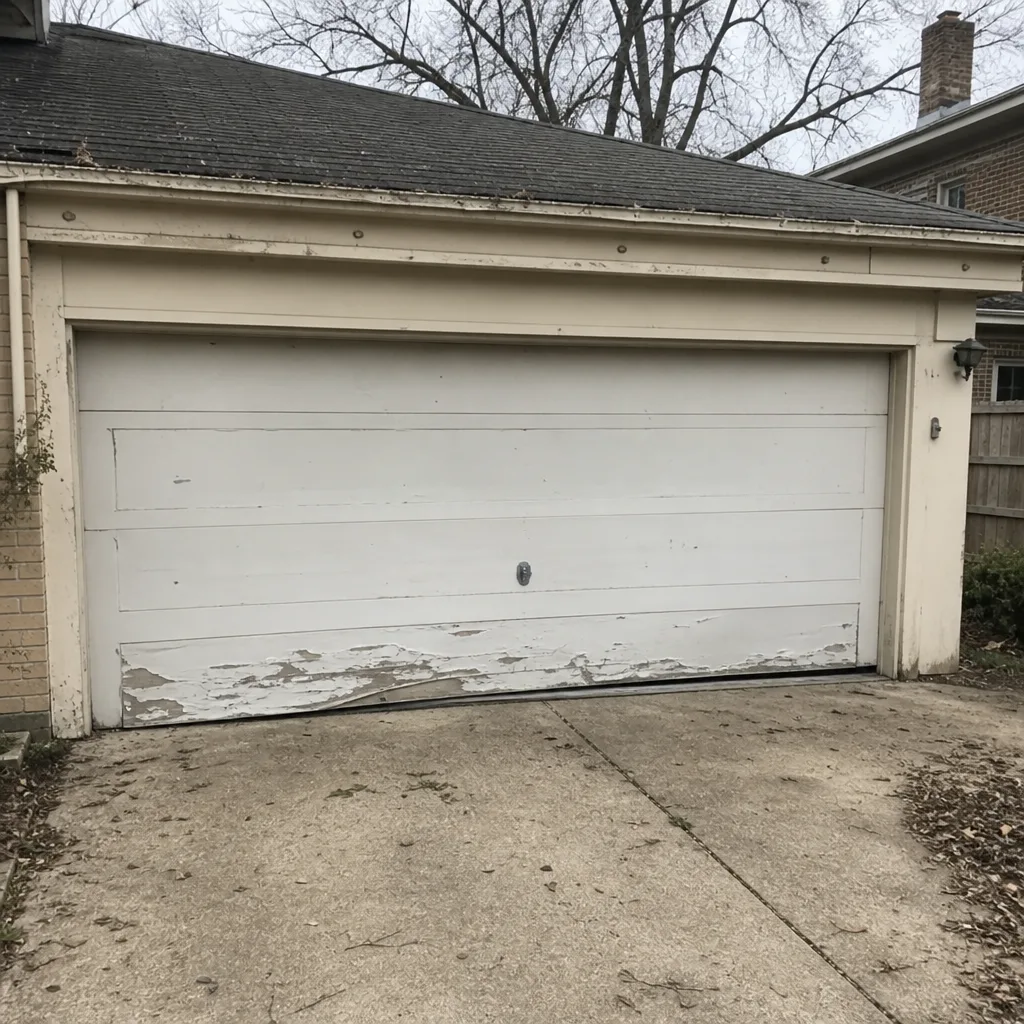 Before
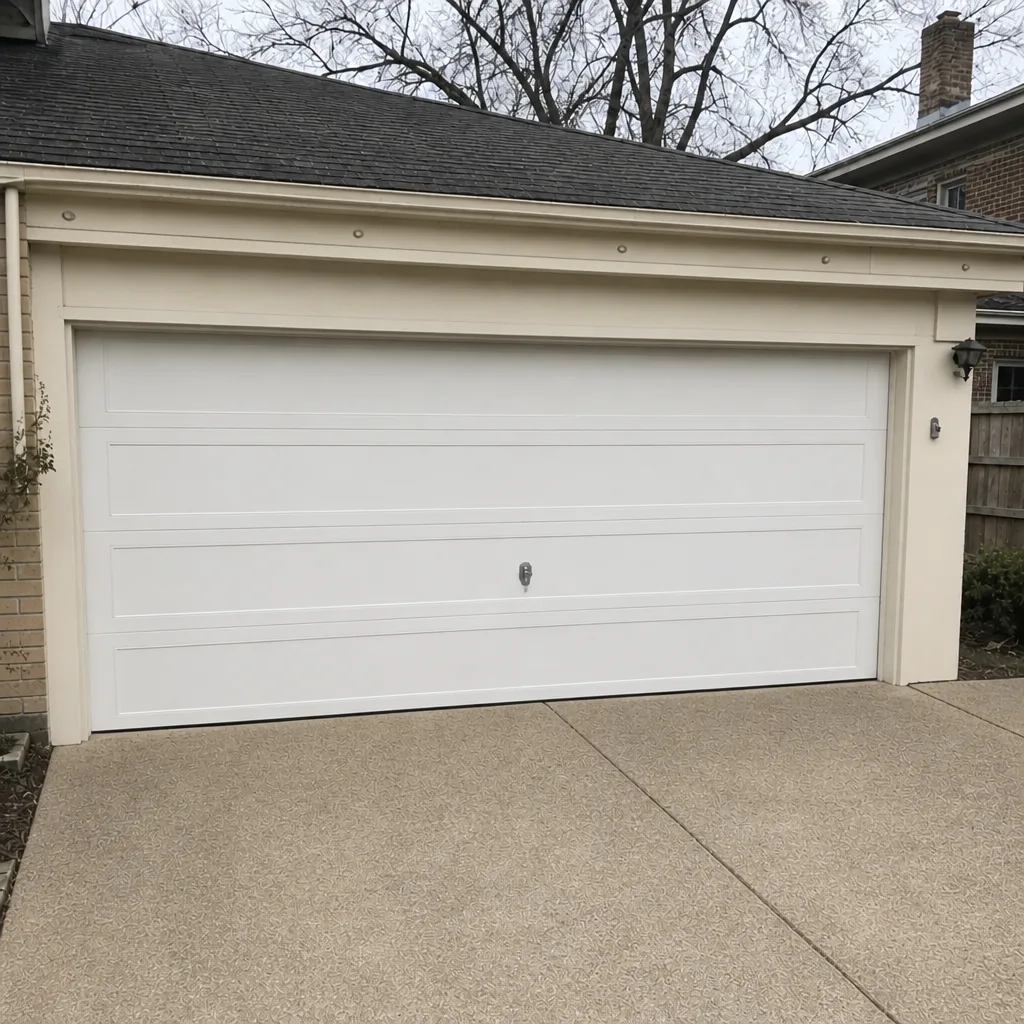 After
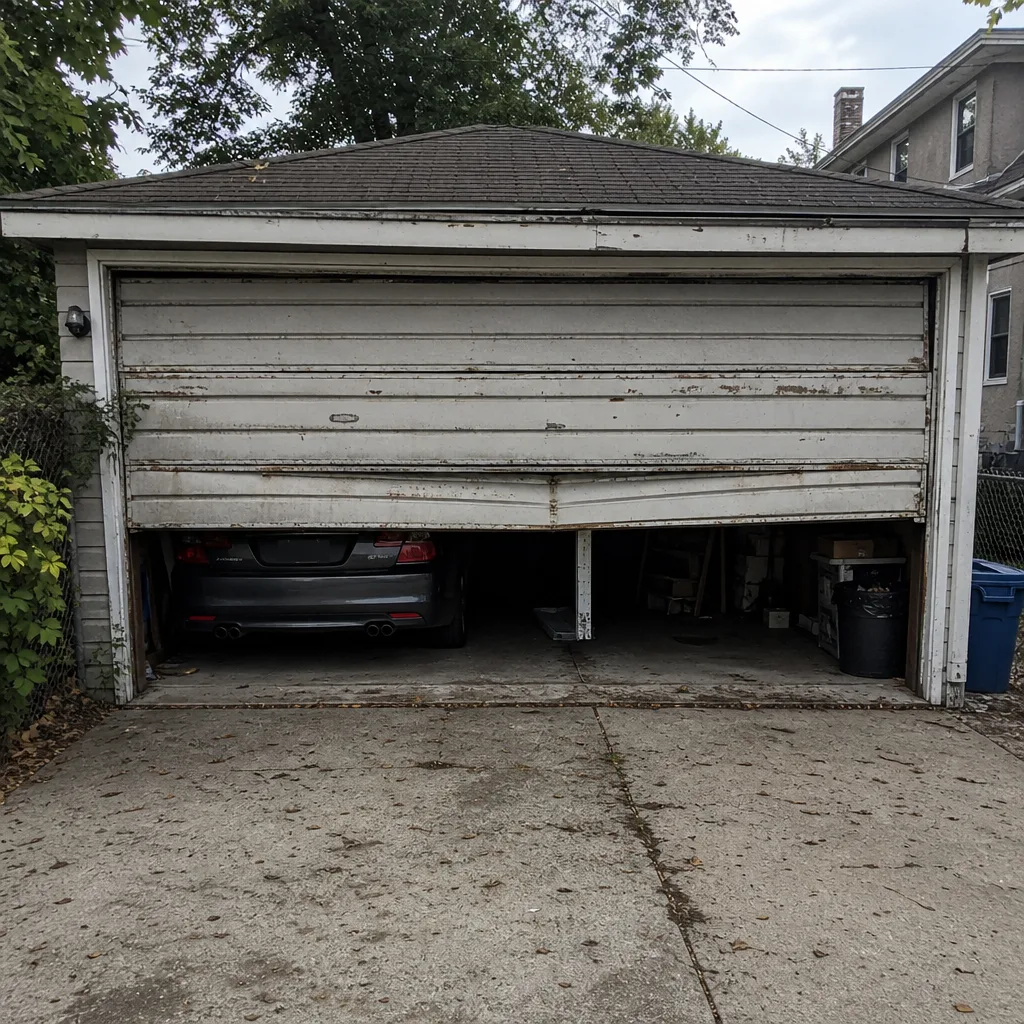 Before
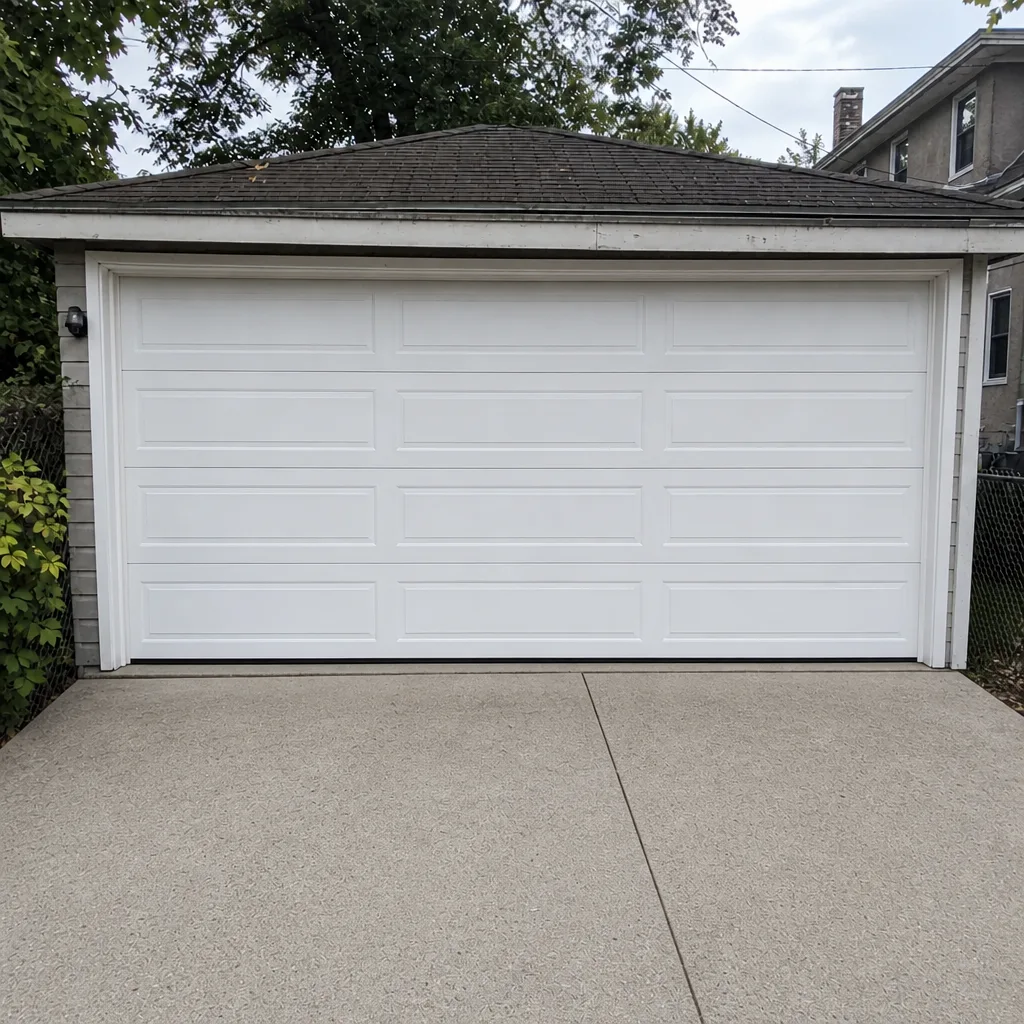 After
When to Call a Professional
Some things are maintenance, and some things are repairs that shouldn’t wait for the next scheduled session. Call a professional when: the balance test fails and the door drops, rises, or feels heavy; a spring has snapped, or you hear a loud bang from the garage and the door won’t lift; a cable is frayed, kinked, or has come off the drum; the door has come off its track; the opener reverses unpredictably, stops halfway, or the safety sensors won’t clear; a panel is bent or the door has been hit; or you see rust, cracks, or gaps in a torsion spring. Spring repair is worth calling in every time – it’s a trained-technician job for good reason, and our technicians handle torsion and extension springs with the proper tooling. Evanston Garage Door Repair Pros offers free estimates in Evanston, and we work on the brand already in your garage – LiftMaster, Chamberlain, Genie, Clopay, and more, by name. Call (855) 305-8770. We answer 24/7. Fast dispatch from 7am to 7pm, Sunday through Friday.
Frequently Asked Questions
Twice a year for the homeowner routine – a fall tune-up in October and a post-thaw inspection in March or April – plus a five-minute monthly visual check. That’s the whole schedule, and it takes 20 to 30 minutes total across the year, not an afternoon. A professional service visit is worth adding every year or two, or any time the manual balance test doesn’t come back clean. Doors in Evanston get an extra challenge because of freeze-thaw cycles, so the twice-a-year rhythm matters more here than in places where the ground stays frozen all winter.
The manual balance test. It’s the earliest and clearest signal that a spring is losing tension, and a door that passes it is a door that’s still safe to operate. It takes 30 seconds, requires no tools, and it’s the check that catches a failing spring months before it snaps. Everything else on the schedule is about keeping the door running smoothly. The balance test is about knowing whether it will. Call (855) 305-8770 if the test comes back off – estimates are free.
No, not on the rollers, hinges, or springs. WD-40 is a penetrating oil, not a lubricant, and it’s too thin to stay on the pivot points. It will quiet a squeak for a few days, then run dry and leave a residue that attracts grit, which accelerates wear on the rollers and hinges. Use a garage-door specific spray lubricant on the springs, white lithium grease on the hinges, and a light silicone spray on the track. Keep the WD-40 for freeing a rusted bolt. If your door is already noisy from WD-40 use, that’s worth a look – call (855) 305-8770 for an estimate.
Evanston’s location on Lake Michigan creates more freeze-thaw cycles than inland suburbs, and freeze-thaw is what wears springs and hardware faster. The lake moderates temperature, which means Evanston gets more days where moisture thaws and refreezes – each cycle works the metal a little more. The spring itself is on a cycle count, not a calendar, so it will fail eventually. But a well-lubricated spring that gets an October tune-up will typically reach its cycle life more gradually, while a dry, ignored spring tends to fail with less warning. Running the balance test in fall gives you that warning. Call (855) 305-8770 if you’d like a technician to check spring tension.
You can skip it in a dry summer, but in a humid one it’s worth ten minutes. Rust on hinges and springs, swelling wooden panels, and a bottom seal that’s gone soft and tacky are all summer problems – and a soft seal that dries out in the fall will crack in cold weather. A quick rust check and a light lubricant pass in July is enough. If you spot rust on a torsion spring, that’s a reason to get a technician out for a spring inspection, not to wait for the next scheduled tune-up. Call (855) 305-8770 for an estimate.
Maintenance is the twice-a-year routine you do yourself – lubrication, seal checks, and the balance test. Repair is anything that fails during that routine: the door doesn’t balance, a spring is visibly rusty or cracked, a cable is frayed, or the opener reverses unpredictably. If the balance test fails, the door feels heavy, or you hear an unusual sound, it’s a repair. The line is clear enough once you’ve run the schedule once. Evanston Garage Door Repair Pros offers free estimates in Evanston for both repair and maintenance visits – call (855) 305-8770. We answer 24/7. Fast dispatch from 7am to 7pm, Sunday through Friday.
The Bottom Line
A garage door doesn’t need a complicated maintenance routine. It needs the right tasks in the right season. In Evanston, that means an October lubrication and balance test before the cold locks the hardware down, a listening winter, a post-thaw inspection in March or April to catch what freeze-thaw movement has done, and a summer humidity check to catch the rust and seal problems the other seasons miss. Use the right lubricants, skip the WD-40 on rollers, and run the balance test every fall. The whole routine is 20 to 30 minutes a year. It’s the difference between a door that fails without warning and one you hear coming. And when something’s past maintenance – a failed balance test, a frayed cable, a broken spring – that’s a call for trained hands, not a wrench, because spring work carries serious injury risk. Our technicians have up to 15 years of experience, and we work on the brand already in your garage. If you’re in Evanston and want a professional set of eyes on your door, Evanston Garage Door Repair Pros offers free estimates. Call (855) 305-8770. We answer 24/7. Fast dispatch from 7am to 7pm, Sunday through Friday.
Written by the team at Evanston Garage Door Repair Pros.