
Last updated November 23, 2026
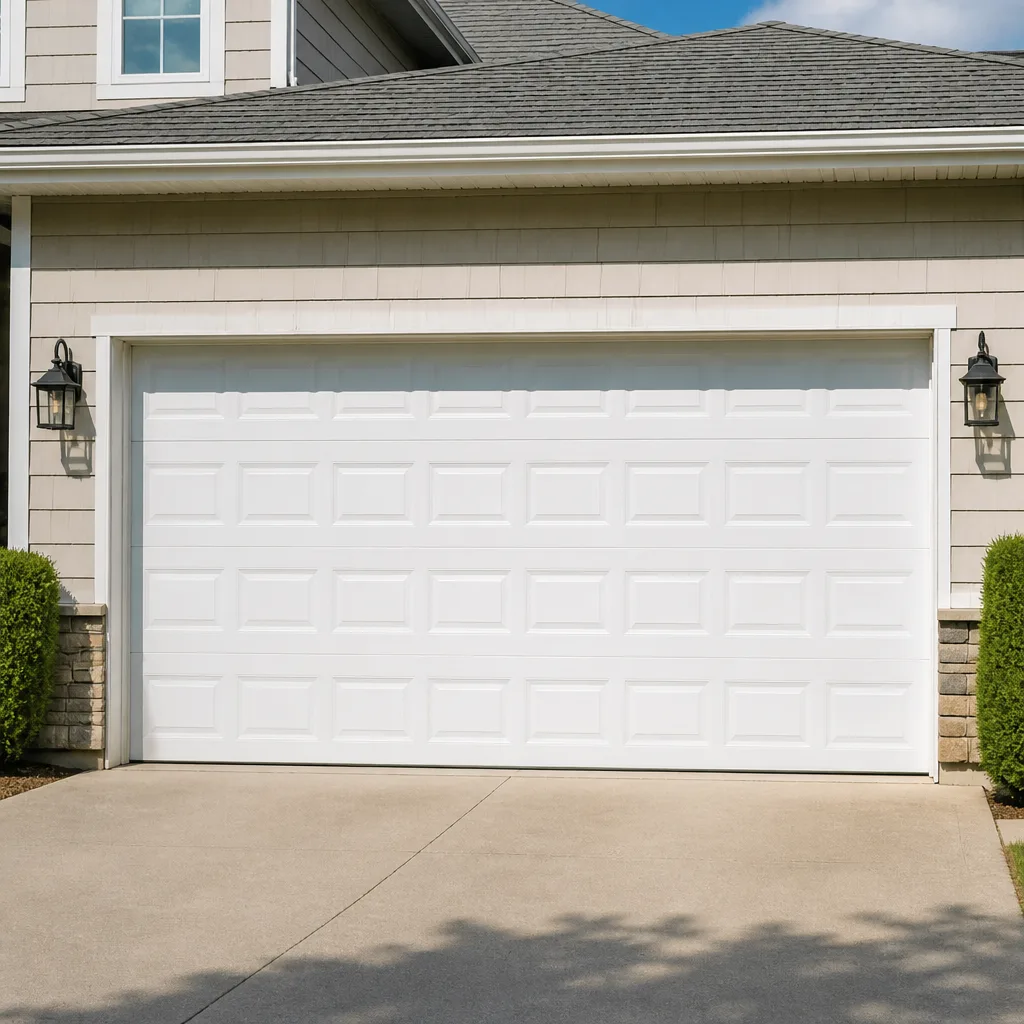 Raised-panel steel
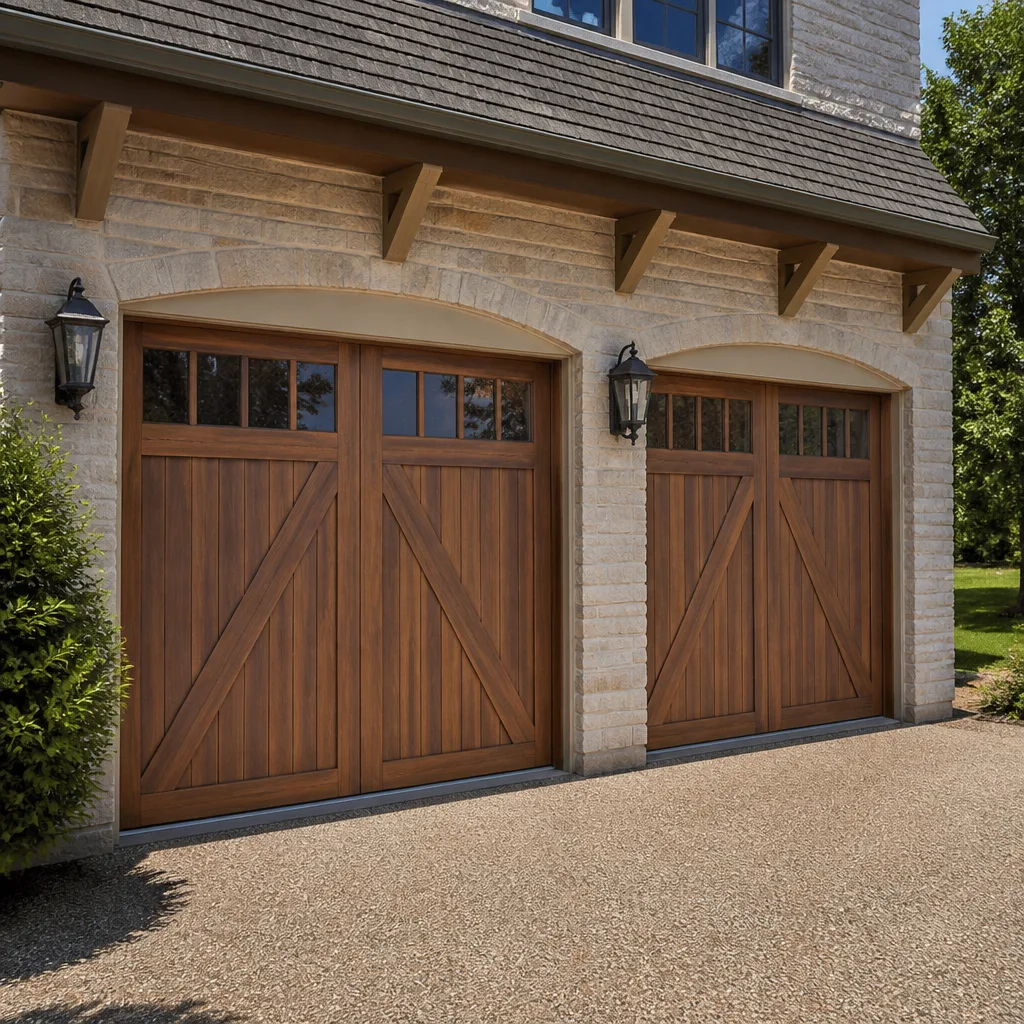 Carriage house
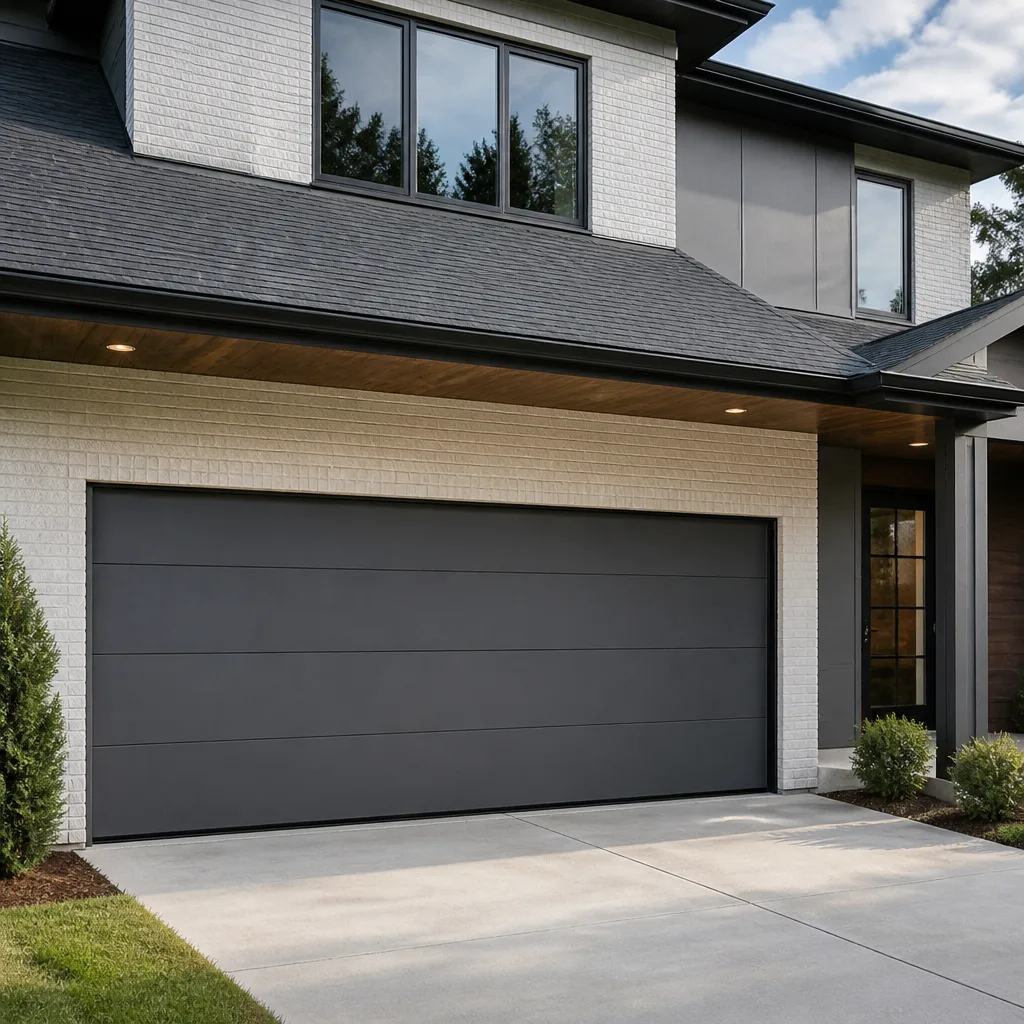 Modern flush
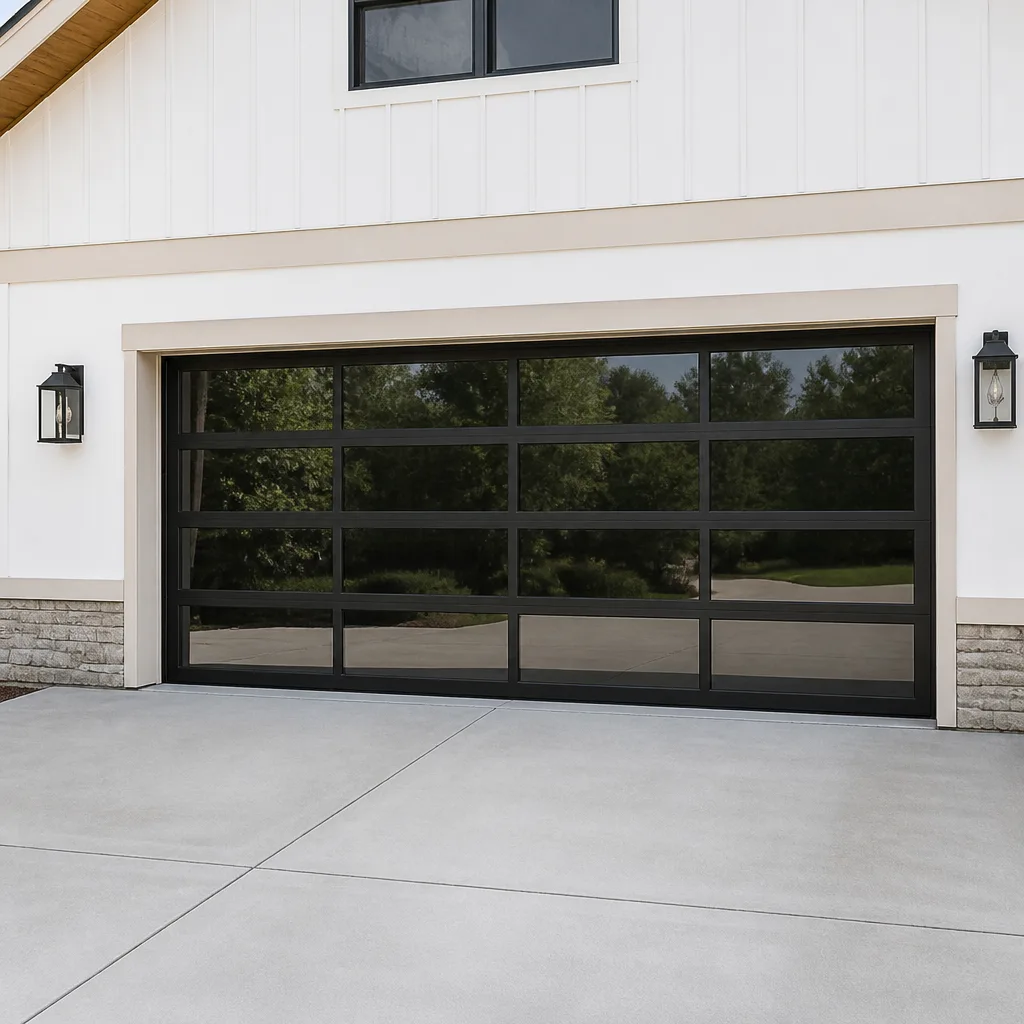 Full-view glass
 LiftMaster openers
 Chamberlain openers
Full 25-point door and opener safety check with every visit - springs, cables, rollers, tracks, and your LiftMaster or Chamberlain opener included
You get a price before we start. It does not change when the pro arrives.
Get your free estimateGarage Door Cost Breakdown: The Evanston Homeowner’s Reference for 2026
The $800 garage door you saw quoted online will cost closer to $1,400 installed in an Evanston two-flat built in 1928. Nobody is padding the bill. That opening probably hasn’t been touched in 40 years, and it’s going to have a few surprises sitting inside it: a header that was never sized for a modern door, jamb boards that have swelled and shifted, and a headroom measurement that won’t take the door anyone quoted from a catalog. Online price lists assume a clean, standard opening in a newer house, and much of Evanston isn’t that. This guide breaks down what garage door work actually costs in Evanston in 2026, what drives the number up or down, and how to read a written estimate so you know exactly what you’re paying for before you sign.
Quick Answer
Garage door replacement in Evanston typically runs from about $900 to $2,400 for a standard single door installed, and $1,300 to $3,800 for a two-car door, depending on the door you pick and how complex the opening turns out to be. Non-standard openings, low-headroom setups, and structural header repair push the project higher, often into the $2,500 to $6,500 range. Repair usually lands between $150 and $650. The only real number is the written estimate you get after someone measures the actual opening.
Styles & brands we work with
- Raised-panel steel
- Carriage house
- Modern flush
- Full-view glass
- LiftMaster openers
- Chamberlain openers
Table of Contents
- What Actually Drives Garage Door Cost in Evanston
- Realistic Cost Ranges for the Most Common Evanston Scenarios
- A Line-Item Breakdown of a Typical Invoice
- Why Older Evanston Homes Cost More Than the Catalog Price
- Permit and Inspection Fees: When They Apply and What They Add
- Repair vs. Replacement: The Honest ROI Math
- How to Read a Garage Door Quote
- What a New Door Costs You Over Time
What Actually Drives Garage Door Cost in Evanston
The door itself is often the smaller half of the bill. What moves the total is the opening it has to fit into and how much work the installation takes once the old door is out. Two neighbors on the same block can buy the identical Clopay door and pay very different amounts to get it hung, because the houses around them were built differently.
Here’s what actually changes the number:
- Opening size. Standard single doors are 8 or 9 feet wide and 7 feet tall. Many pre-war Evanston garages are neither. A 9-foot-6 opening, a door under 7 feet, or a sagging head that re-measures short all mean a custom-width or custom-height door, which adds both material and lead time.
- Headroom. A standard torsion door needs roughly 12 inches of headroom above the opening. Lots of older Evanston garages have 8 or 9. Low-headroom hardware (a different torsion setup, sometimes a rear-mount spring or a low-clearance track) costs more in parts and takes longer to dial in.
- Track and framing condition. Rotting jambs, a bent or rusted track, or a header that was never built for the weight of an insulated door all have to be corrected before a new door goes up.
- Insulation and door material. A basic uninsulated steel door costs far less than a fully insulated carriage-style door with windows. An insulated door also weighs more, which may mean heavier-gauge springs and hardware.
- Opener work. If the existing opener stays, that saves money. If it needs to be replaced or connected to a new smart opener, that’s a separate line item.
- Access and clearance. A tight alley, a low overhang, or a garage packed to the ceiling slows installation and sometimes requires moving things out before the crew starts.
None of this is guesswork once someone measures. That’s why an online calculator can’t give you a real Evanston number: it’s answering a question about a house it has never seen.
Realistic Cost Ranges for the Most Common Evanston Scenarios
Most garage door projects in Evanston fall into one of four buckets. Read these as ranges, not quotes. The written estimate is what sets the final price.
Standard Replacement
This is a single or double door in a standard opening with sound framing, adequate headroom, and an existing track in usable shape. It’s the simplest job and the cheapest per door.
- Single door, standard opening: roughly $900 to $2,400 installed
- Double door, standard opening: roughly $1,300 to $3,800 installed
Non-Standard Opening
This is where the online quote falls apart. A narrow single door, a door under 7 feet tall, or an opening that isn’t square means a custom-build door and often a modified track and spring setup. Expect $2,200 to $4,500 installed, sometimes more if the door is unusually wide or tall.
Low-Headroom Install
Garages with 8 to 10 inches of headroom need low-clearance hardware, and often a different spring configuration. The door material may be the same, but the hardware and installation time push the total up. Budget roughly $1,600 to $3,500 installed for a standard-width door in a low-headroom setup.
Full Structural Header Repair
Sometimes the door itself was fine and the framing behind it wasn’t. A sagging or undersized header, rotted jamb material, or a face that no longer takes the weight of an insulated door requires carpentry before a new door can go on. This is the scenario where a “cheap” replacement turns expensive, because the door is only part of the work. Plan on $2,500 to $6,500 depending on how much framing has to be replaced and how much of the finished interior needs to be opened up.
A Line-Item Breakdown of a Typical Invoice
Knowing the categories on a garage door invoice lets you compare two quotes fairly. A quote that lists one lump sum and nothing else tells you very little. A quote that shows you the door model, the hardware, and the labor separately lets you see where the money is going.
Here’s what a typical Evanston replacement invoice looks like, broken into lines:
- Door (material). The panel set itself. A basic uninsulated steel door sits at the low end. An insulated steel door (Clopay and Amarr both make well-regarded insulated lines) or a carriage-style door with decorative hardware sits higher.
- Remove and dispose of the old door. Old doors go to the dump, not the truck bed, and disposal is usually a line item.
- New track and hardware. Track, hinges, rollers, and fasteners. Reusing existing track is sometimes fine; often the old track has a bend in it and it needs replacing.
- Springs. A pair of torsion springs sized to the weight of the new door. Springs are weight-rated, so a heavier insulated door needs heavier springs. Sometimes the spring line is bundled with the hardware.
- Opener (optional, only if replaced). If the existing opener is staying, this line disappears. If not, a new Chamberlain or LiftMaster unit lands here.
- Labor. The crew’s time to remove the old door, set the new one, hang the track, wind the springs, and adjust the balance.
- Haul-away and cleanup. Sometimes folded into labor, sometimes separate. Ask.
- Permit and inspection (if required). Not every job needs one. See the next section.
When you compare two quotes, compare them line by line. A quote that’s $400 lower on the front may be missing a hardware line or a spring line, or it may be using a lighter door rated for fewer cycles. For repair work, the invoice looks different: garage door repair jobs almost always come down to a single failed component, so the invoice is shorter and the line items more specific.
Why Older Evanston Homes Cost More Than the Catalog Price
Evanston has a lot of housing stock that predates the modern garage door. Two-flats, bungalows, and foursquares across neighborhoods like the Dempster Street corridor, Main Street, and the streets around Northwestern all show up with garages built to whatever standards were common at the time. That history has real cost consequences.
The most common reason a catalog price doesn’t stick:
- Openings were built by hand, not to a spec sheet. A framing crew in the 1920s cut each opening to fit the plot. A 9-foot door off a shelf may simply not fit.
- Header beams aren’t the size you’d expect. Many older garages have a header that was fine for a lighter wood door but not for a heavier insulated steel door. If the header has to be reinforced, that’s carpentry that has to happen before installation starts.
- Jamb boards have moved. Chicago-area soil and freeze-thaw cycles shift shallow footings over time, and the jamb and head can be out of square by more than a modern door will tolerate.
- Old doors weren’t insulated, so the interior framing wasn’t built for the weight. A new insulated door may be two or three times the weight of the door it’s replacing, which changes the spring rating and sometimes the hardware.
- Access. Narrow side yards and rear-alley garages mean the door comes in on a hand truck or by two people, not rolled directly in.
These aren’t reasons to avoid a new door; they’re reasons to expect an honest measurement before a fixed price gets quoted. A technician walking the opening before the sale is how you get a real price. We know LiftMaster, Chamberlain, Genie, Clopay, Amarr, and the other major brands by name, but we also know that the brand of door matters less than whether the opening around it can take it.
Permit and Inspection Fees: When They Apply and What They Add
Not every garage door replacement needs a permit in Evanston. The threshold for what counts as permit-required construction comes down to how much of the structure changes. Swapping a door in a sound existing opening is one thing; cutting into a header or changing the size of the opening is usually another.
Where a permit typically applies:
- Structural changes to the header or opening. If a new opening size requires new framing or reinforcement, expect a permit.
- New construction or a garage that didn’t previously have a door. Building departments usually want to see the work.
- Changes that affect egress or safety in an attached garage. A door is a wall on the outside envelope of the house, and changes to it can trigger an inspection.
The safest way to know is to call the city’s building department and describe exactly what you’re planning. A reputable installer will know whether a permit is required before work begins and will tell you rather than let you find out the hard way. Permit and inspection fees themselves are usually a modest line item, but the timing matters: a permit can add days or weeks to the schedule because it’s out of the installer’s hands, and the work can’t start until the permit is issued.
The full project cost of a permitted job is therefore permit fee plus inspection timing plus the actual work. A quote that ignores the permit and then adds it later is a quote that wasn’t honest. A quote that names the permit up front is a quote you can trust.
Repair vs. Replacement: The Honest ROI Math
A door that’s still functional but clearly losing its grip is the hardest call in the business. Here’s how to think about it.
Repair is almost always the better financial call when:
- The door panels are sound. No rot, no bent panels, no heavy damage.
- The problem is mechanical. Springs, rollers, hinges, a bent track, an opener that’s over its service life.
- The opener is failing, not the door. garage door opener repair is one of the highest-value calls you can make if the door itself is in good shape.
- The door has a few more seasons left and the failure is isolated. A single broken spring on a door that’s otherwise healthy is a repair, not a replacement.
Replacement is usually the better call when:
- The door is heavily damaged. Bent panels, rot at the base, or damage that compromises the door’s rigidity.
- You’re already paying for a big repair. If a spring replacement plus a track replacement plus opener work pushes close to the cost of a new door, the new door is the smarter spend.
- You want insulation. An insulated door reduces heat transfer and quiets the garage. If you’re heating or cooling the space, the insulation pays you back in comfort.
- The door is a safety hazard. A door that’s out of balance, or that a child could push up, needs replacing.
Our technicians have up to 15 years of experience reading the difference between a door that needs a garage door spring repair and a door that’s lived its life. In our experience, the honest answer for most Evanston doors in decent shape is repair. The honest answer for a door that’s already halfway through its second spring set, is replacement.
How to Read a Garage Door Quote
Two quotes for the same door can look like the same door and still be very different documents. Here’s what to look for.
- Does it name the door model? “Standard steel door” is not a specification. A named model (a Clopay model number, for example) is.
- Does it list the hardware separately? Track, hinges, rollers, springs. If it doesn’t, you don’t know what you’re getting.
- Does it say whether the existing opener stays? If the quote assumes the old opener stays and the opener fails a month later, that’s a second bill.
- Does it show the spring rating? Springs are weight and cycle rated. A quote without a spring line may be a quote with a spring sized for a lighter door.
- Does it include disposal? It should. If it doesn’t, ask what happens to the old door.
- Does it call out the permit situation? A good quote tells you whether a permit is required and whether that’s included or separate.
- Does it say the written estimate is the price? It should. The price is quoted and agreed before any work starts.
If a quote won’t answer any of these, it’s worth a second opinion. A free estimate should cost you nothing and tell you a lot.
What a New Door Costs You Over Time
Cost isn’t just the invoice on install day. A new door also has an ongoing cost profile: spring replacement, opener replacement, and minor adjustments.
A well-installed door on a home that isn’t abused will run for years without much attention. Springs are the wear item, and a standard torsion spring set typically lasts several years depending on how often the door cycles. When springs eventually fail, that’s a repair, not a replacement.
The bigger ongoing cost to watch is the opener. If your opener is old and on an unconnected system, you’ll eventually want a modern connected one, and a new Chamberlain or LiftMaster unit solves both the function and the app question. At that point, you’re choosing the door and opener together so they’re specced for each other. Insulated doors are heavier and need correctly rated springs; lighter doors are cheaper but don’t hold a temperate garage. Pick the door you want and let the installer size the springs and opener around it, not the other way around.
Common Mistakes to Avoid
- Accepting an online price without a measurement. That number assumes a standard opening and sound framing. Evanston homes often don’t have either. Get measured first.
- Choosing the cheapest quote without seeing the line items. The low quote may be light on hardware, may use a door rated for fewer cycles, or may leave out disposal. Compare line by line.
- Skipping the permit when the header is changing. If the opening size is changing or the header is being reinforced, ask the city’s building department before work starts. Backtracking on a permit is expensive.
- Sizing springs for the wrong door. Springs are weight-rated. A spring set spec’d for a lighter door on a heavier insulated door will fail prematurely.
- Replacing the door while ignoring the opener. A new heavier door on an undersized opener is a recipe for a repair visit a few months later.
- Assuming a repair quote and a replacement quote are the same document. They’re not. A repair quote is a component quote; a replacement quote is a whole-door quote. Ask which one you’re holding.
- Ignoring the headroom measurement. Low headroom is one of the most common reasons a catalog price doesn’t hold in an older Evanston garage.
See the difference
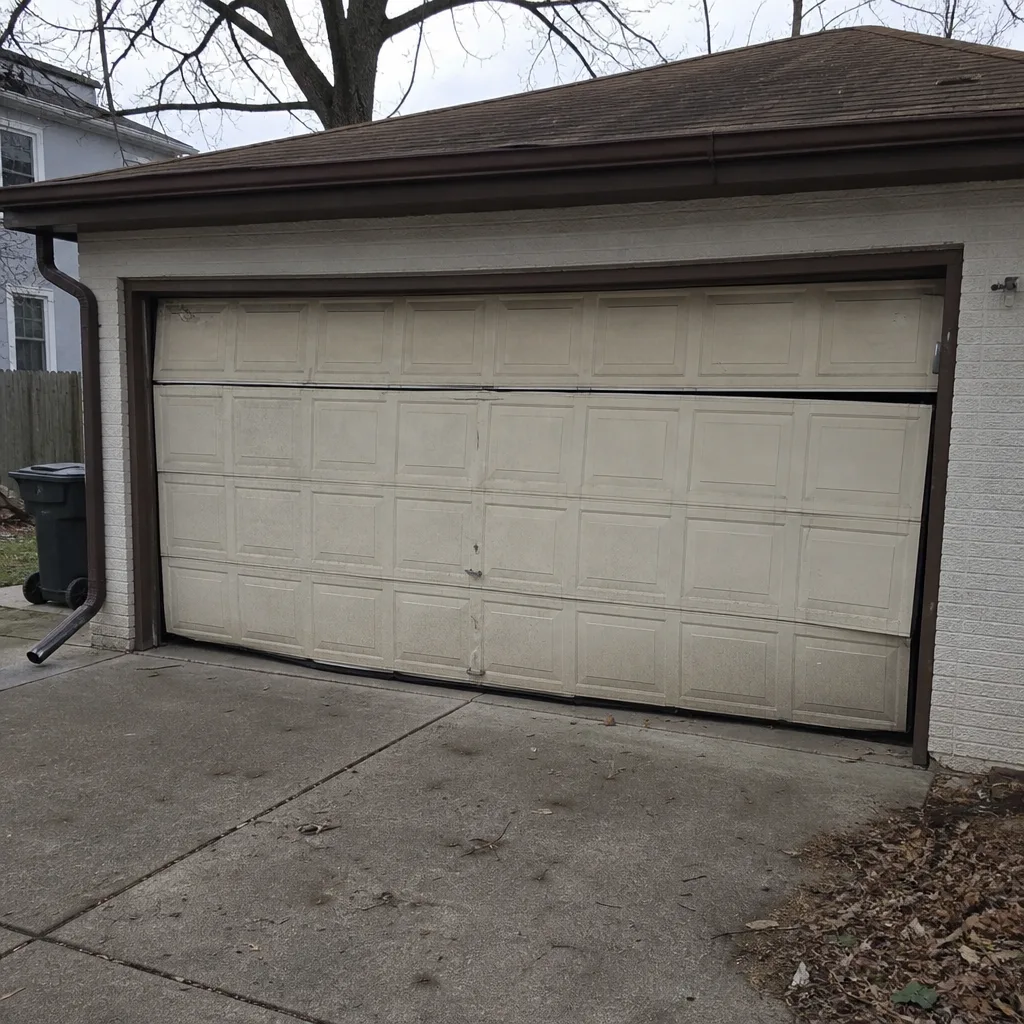 Before
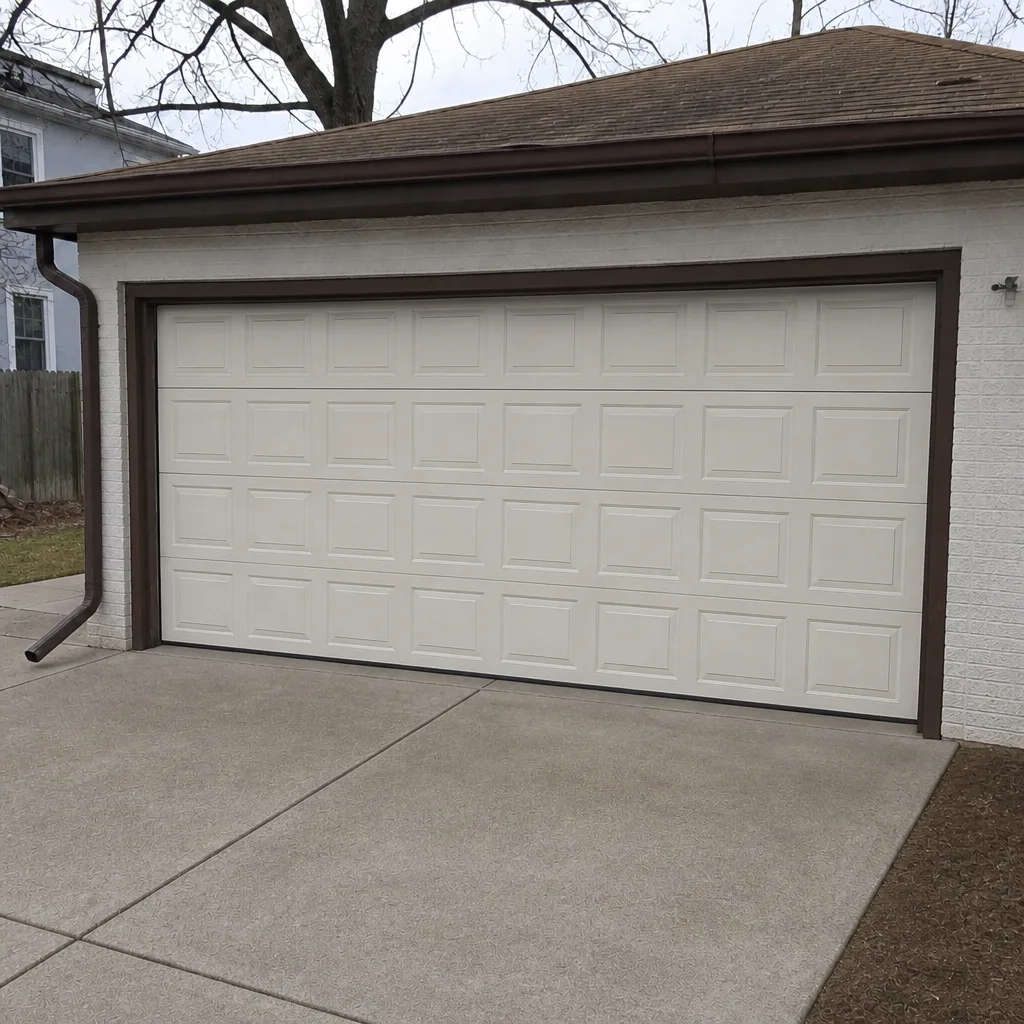 After
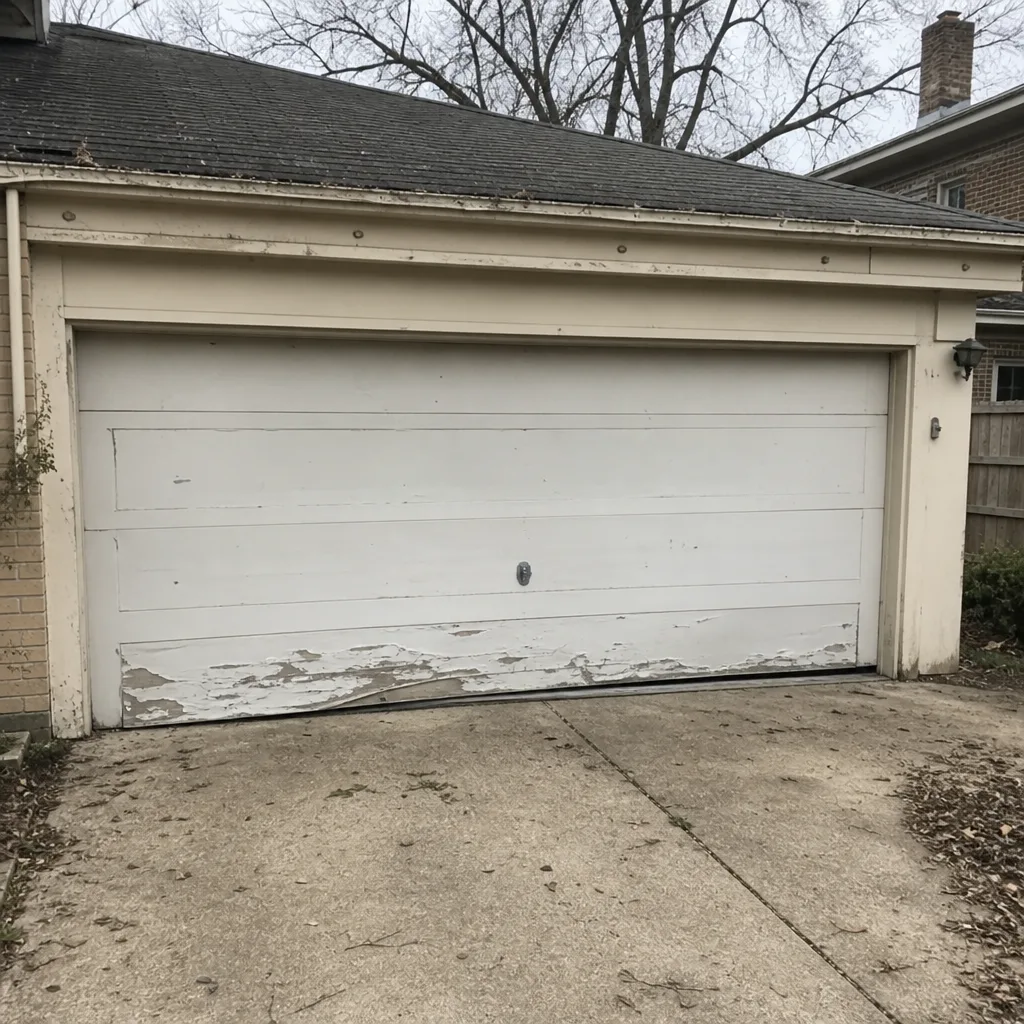 Before
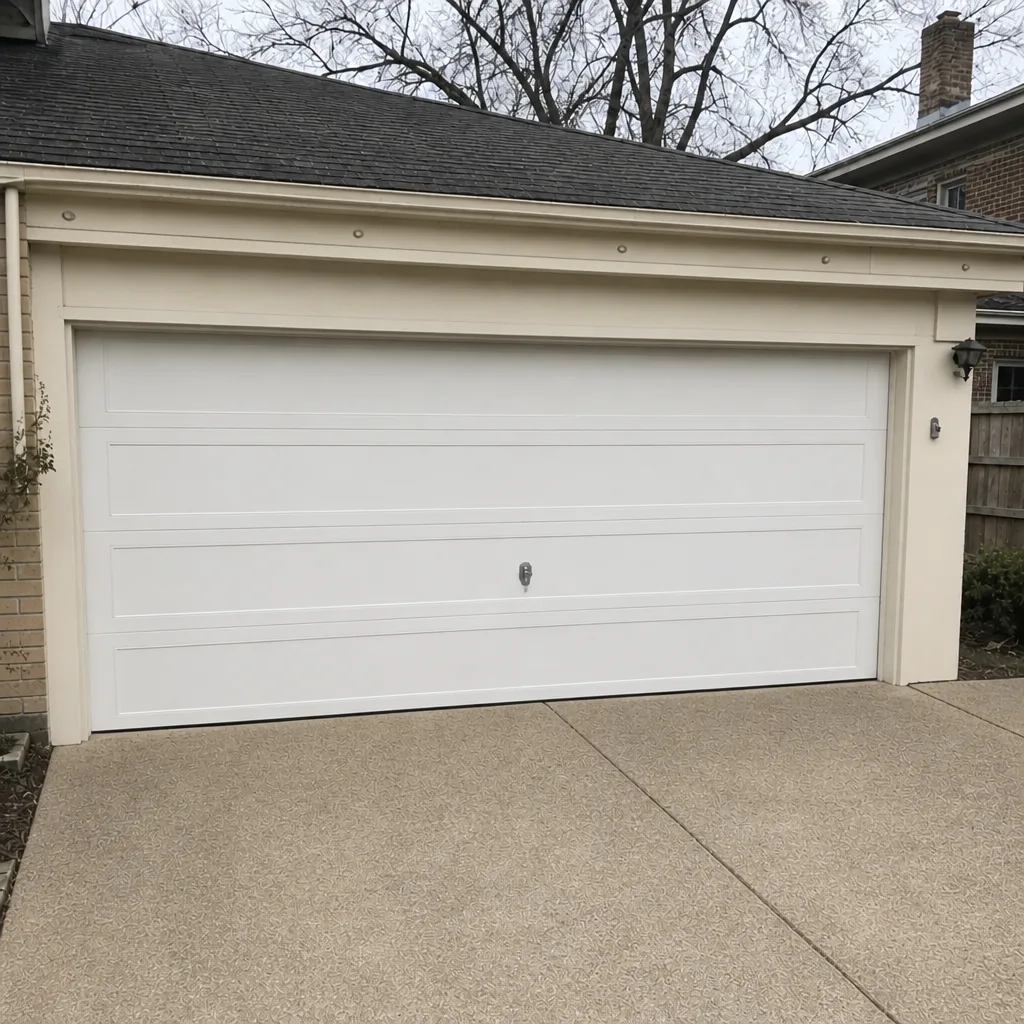 After
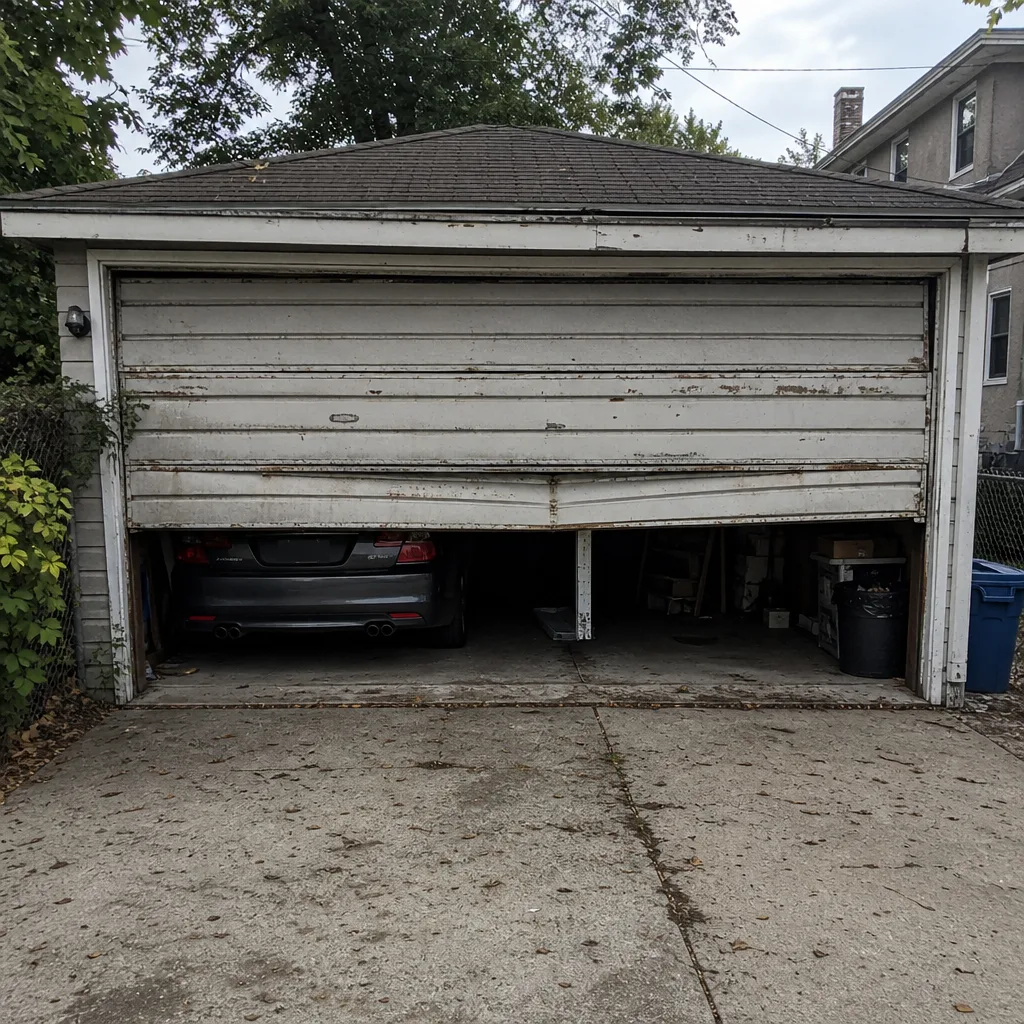 Before
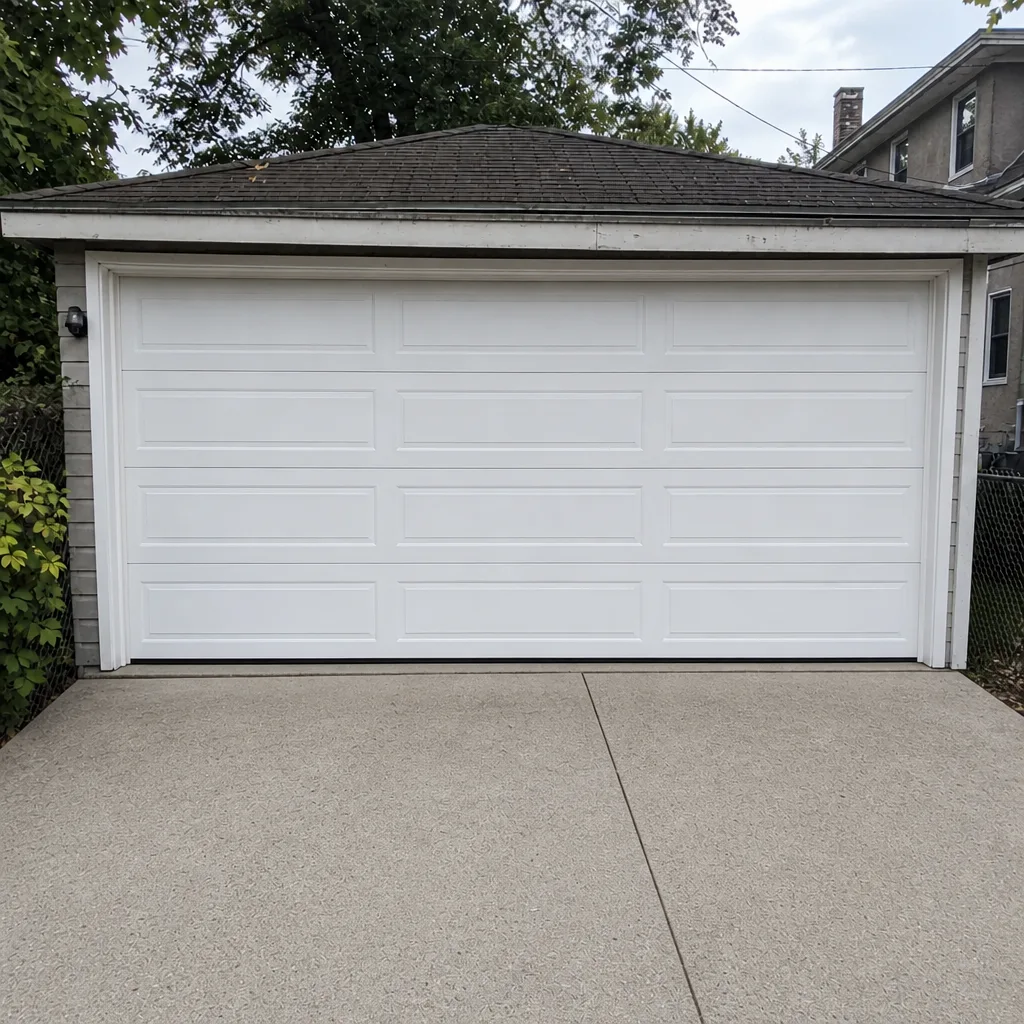 After
When to Call a Professional
Some garage door work is genuinely a professional job, and spring work is the clearest example. A torsion spring holds hundreds of pounds of tension. If it’s released unexpectedly, the result can be serious injury or worse. This is not a repair to attempt with a pair of pliers and a video. If your door is out of balance, making noise, or won’t stay up, the right call is to have it looked at by a trained technician.
Other signs it’s time to call: the door is visibly bent, the track is bent or separated, the opener is straining, the door won’t close all the way, or the door won’t open at all and you can’t get your car out. Those are all same-day calls. We answer 24/7. Fast dispatch from 7am to 7pm, Sunday through Friday. Same-day service is available on most repairs, and same-day is what you want when the garage is your front door for the day.
For a full replacement, the call is about measurement and scheduling, not urgency. We’ll come out, measure the actual opening, and give you a written estimate at no cost. Call (855) 305-8770 for a free estimate.
Frequently Asked Questions
A standard single door runs about $900 to $2,400 installed, and a double door about $1,300 to $3,800. Non-standard openings, low-headroom setups, and structural header repair push the total higher, often to $2,500 to $6,500. The only number that matters is the written estimate after measurement. Call (855) 305-8770 for a free estimate, and we’ll give you a written price for your exact opening.
Online quotes assume a standard opening, adequate headroom, and sound framing. Many Evanston homes have none of those, so the real cost is the door plus the corrections to make the opening work. A written estimate after measurement tells you which of those items apply. Call (855) 305-8770 for an exact quote.
Not always. A simple door swap in a sound opening often doesn’t need one, but structural changes to the header or opening, or work that changes the size of the opening, usually do. Call the city’s building department and describe exactly what you’re planning; a reputable installer will tell you up front whether a permit is required.
Spring repair typically runs about $150 to $350 for a single spring, and a matched pair is usually replaced together, so a pair costs about twice that. A torsion spring holds hundreds of pounds of tension and is not a DIY repair. Call (855) 305-8770 for an exact quote, estimates are free.
Yes, same-day service is available on most repair calls. When your garage door won’t move, every hour matters, so we prioritize repair calls and can often get a technician out the same day. We answer 24/7. Fast dispatch from 7am to 7pm, Sunday through Friday. Call (855) 305-8770.
The written estimate is the price. We quote and agree on the price before any work starts, and we don’t change it once we’re on site. If something unexpected turns up mid-job (a hidden framing issue, for example), we stop and give you a revised written estimate before continuing, not after. Call (855) 305-8770 for a free estimate.
The Bottom Line
Garage door costs in Evanston are driven by the opening, not the door. A standard replacement in a sound opening runs $900 to $3,800 depending on size and door choice. A non-standard opening, a low-headroom setup, or structural header repair adds real money, and the only honest way to know which one you’re facing is to have the opening measured. Springs are a repair, not a replacement, and a broken spring is a same-day call. The written estimate is the number. Have someone who knows the hardware come measure, and you’ll have a price you can actually plan around. Evanston Garage Door Repair Pros gives free estimates and a written price before any work starts. Call (855) 305-8770 to get on the schedule.
Written by the team at Evanston Garage Door Repair Pros.