
Last updated November 23, 2026
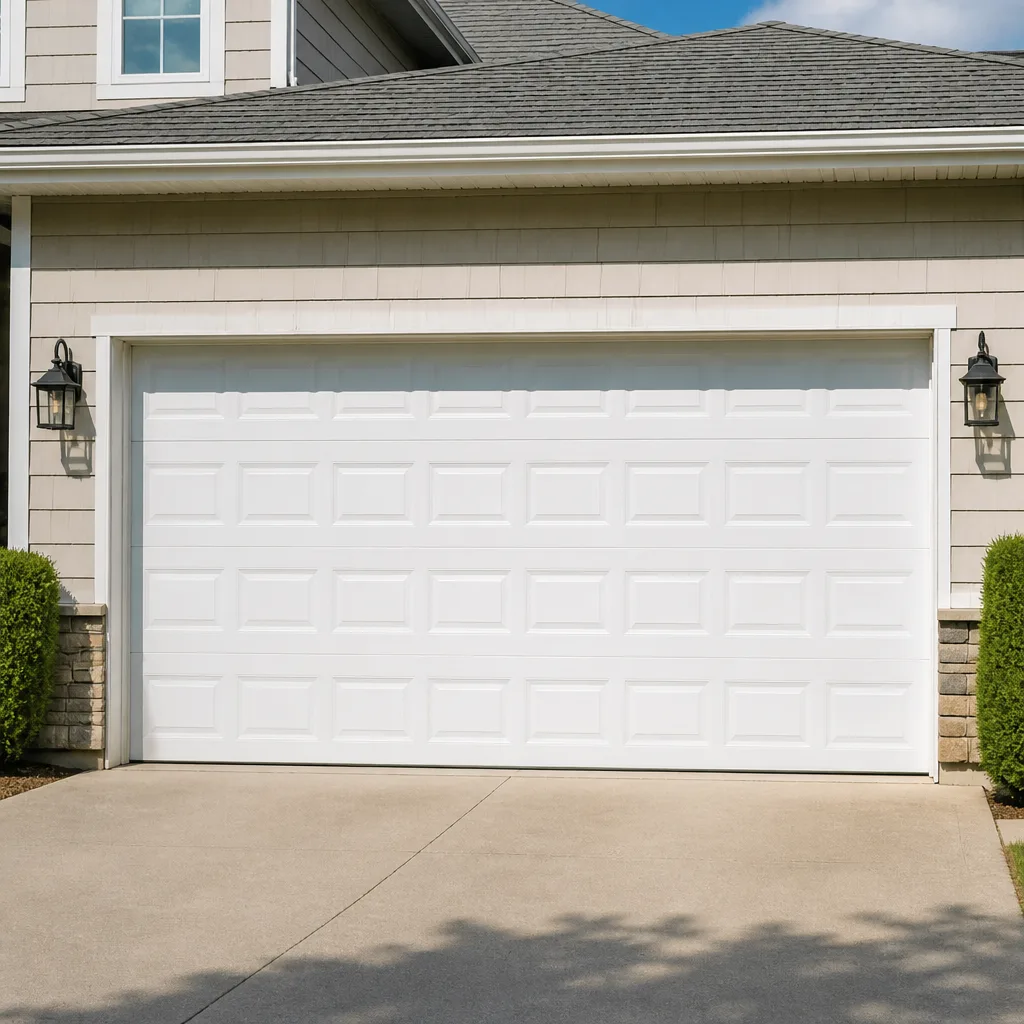 Raised-panel steel
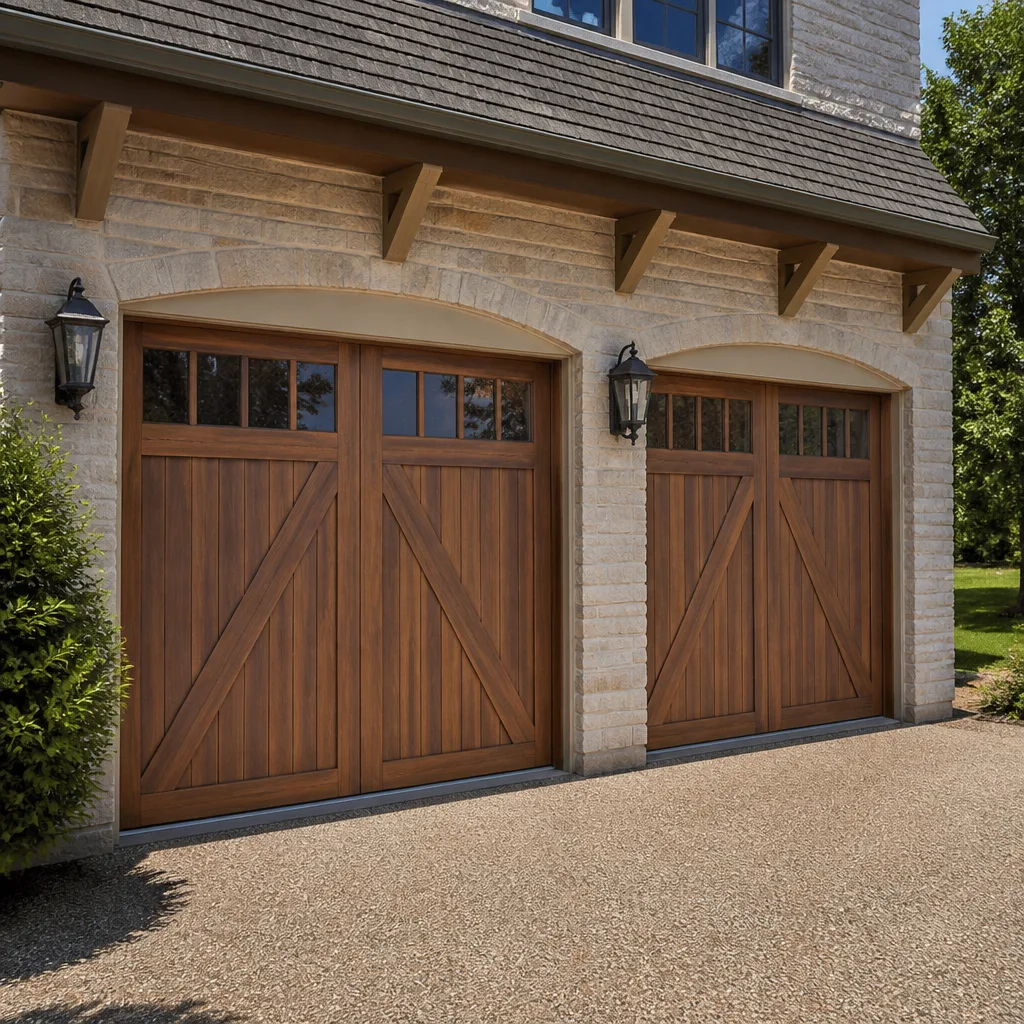 Carriage house
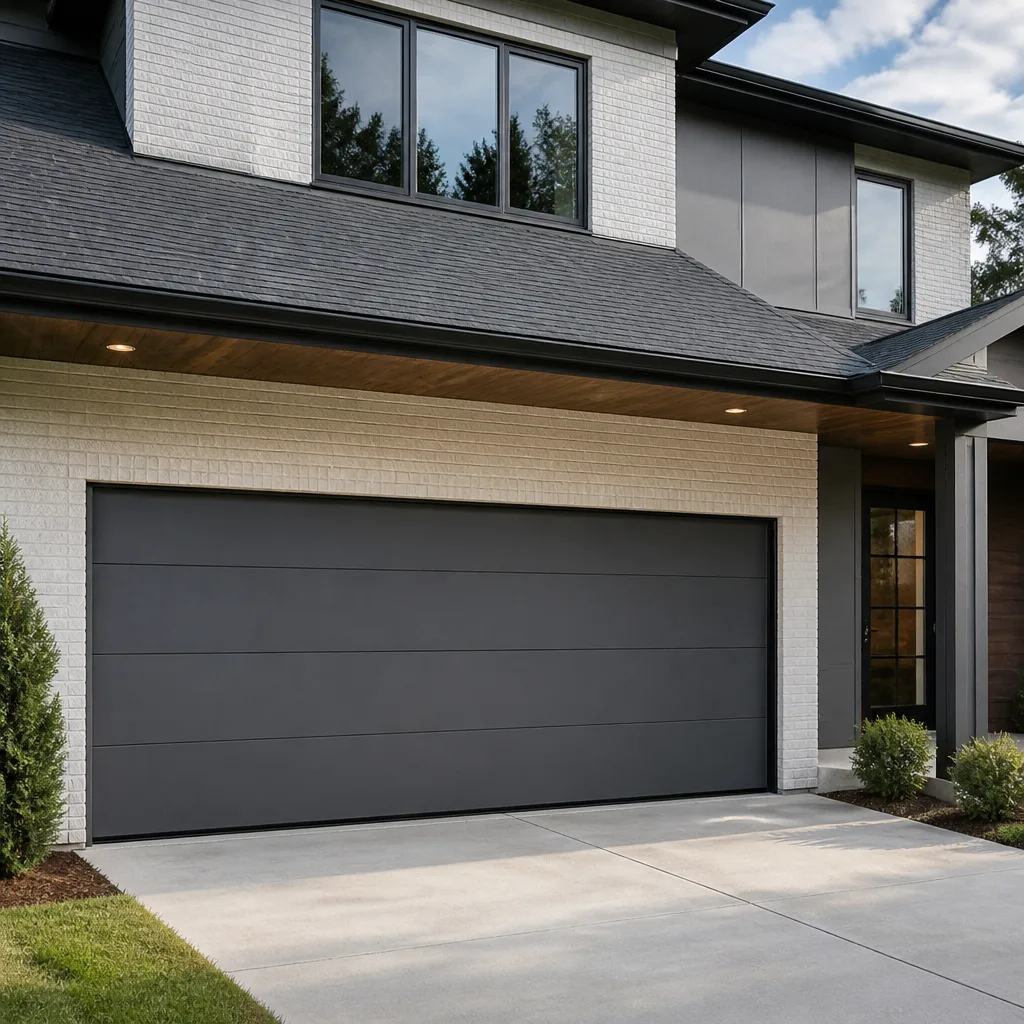 Modern flush
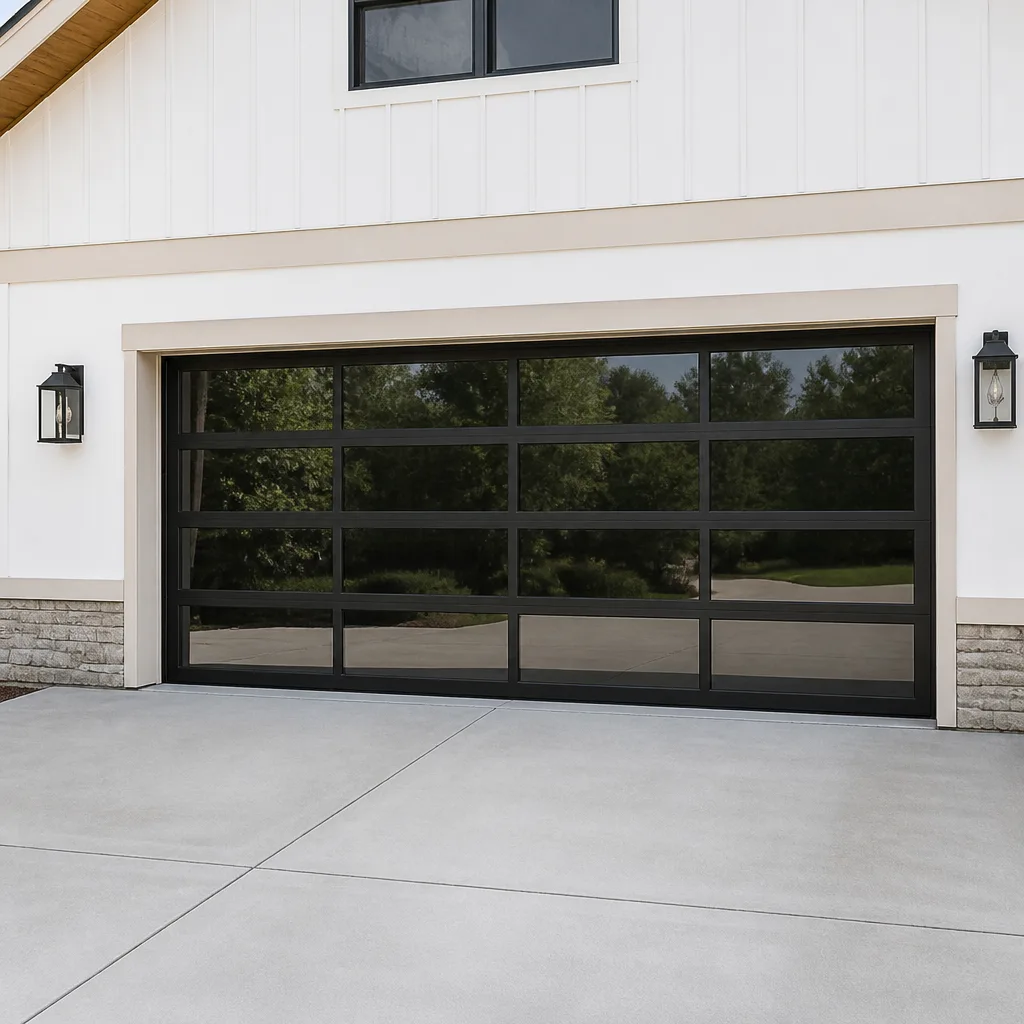 Full-view glass
 LiftMaster openers
 Chamberlain openers
Full 25-point door and opener safety check with every visit - springs, cables, rollers, tracks, and your LiftMaster or Chamberlain opener included
You get a price before we start. It does not change when the pro arrives.
Get your free estimateGarage Door Warning Signs: An Evanston Homeowner’s Reference Guide
A garage door that hesitates for two seconds before moving isn’t “getting old.” It’s telling you something specific about your opener’s capacitor or your spring balance, and which one it is determines whether you have a week or a weekend to fix it. Most homeowners treat every odd noise and slow start the same way, which is exactly how a cheap fix turns into an expensive one. A door that jerks but opens is a different problem from a door that groans but opens smoothly, and the two point at completely different parts. This guide maps each warning sign to the component it usually means, in plain terms, so you can judge urgency before you pick up the phone. We’ll walk through Evanston doors specifically.
Quick Answer
The most urgent garage door warning signs in Evanston are a loud bang followed by a door that won’t lift, visible gaps between cable strands, a door that hangs crooked, and any door that reverses without a clear obstruction. These four point to spring, cable, track, or sensor failure and call for a technician today. Slower clues – grinding, hesitation, a remote that only works up close – usually mean bearing wear, opener capacitor decline, or a tired battery, which you can typically schedule within the week rather than the hour.
Styles & brands we work with
- Raised-panel steel
- Carriage house
- Modern flush
- Full-view glass
- LiftMaster openers
- Chamberlain openers
Table of Contents
- The Symptom-to-Component Diagnostic Map
- Opener Problem or Mechanical Problem? How to Tell
- The Sounds That Signal Spring Failure
- Cable Fraying: When Wear Means This Month vs. Today
- Manual Works, Powered Doesn’t: What That Means
- Safety Sensors, Photo Eyes, and Reversal Problems
- What Evanston Weather Does to Your Door
- When to Call a Professional
The Symptom-to-Component Diagnostic Map
Every warning sign on a garage door is a diagnostic pointer. Read it correctly and you know which part to inspect, how fast to act, and whether the job is a five-minute adjustment or a same-day repair. Here’s how the mapping works in practice.
- Loud bang from above the door, then nothing moves. Torsion spring snapped. This is a stop-the-door problem. Don’t force the opener.
- Door rises partway, then stops or reverses. Spring balance is off, or the opener’s travel limits have drifted. Often both.
- Grinding, scraping, or squealing during travel. Rollers, hinges, or the torsion tube bearings. A maintenance item, but a loud one.
- Door hangs crooked, one side lags. A stretched or broken cable on one side, or a broken extension spring.
- Opener runs but the door doesn’t move. Broken spring, stripped gear in the opener, or a snapped drive belt.
- Door reverses before touching the floor. Photo-eye misalignment, obstruction, or a limit switch set too high.
- Remote works only from close range. Battery, antenna wire, or a logic board issue in the opener head.
- Door slams down hard. Spring tension weak, or the opener’s down-force setting is too high.
Notice something about that list: almost every sign points to one of four systems – springs, cables, tracks and hardware, or opener electronics. Once you know which of those four is talking to you, the urgency question answers itself. In Evanston, where doors sit through a wet spring and a freezing winter, the wear cycle on springs and cables runs a little differently than in drier parts of the country. We’ll come back to that.
For any of these symptoms that points to hardware rather than electronics, the right next step is a conversation about garage door repair rather than a trip to the hardware store.
Opener Problem or Mechanical Problem? How to Tell
This is the single most useful distinction in the whole guide. Openers and doors are two systems working together, and a sign that looks electrical is often mechanical and vice versa. The good news: you can separate them with nothing but your eyes and ears, no tools.
Watch the opener head while the door runs
- Stand inside the garage and watch the opener head (the motor unit above the door) as the door moves.
- If the opener runs, sounds normal, but the door doesn’t move, the opener is fine and the problem is mechanical – a spring, a cable, or a stripped gear in the rail.
- If the opener clicks, hums, or hesitates before the door moves, the problem is likely electrical – a capacitor nearing failure, a worn logic board, or a drive gear that’s skipping.
- If the opener runs and the door moves but the movement is rough, jerky, or accompanied by scraping, the opener is probably fine and the door’s tracks, rollers, or hinges need attention.
- If nothing happens at all – no click, no hum, no light – suspect power to the unit, a dead remote battery, or a safety sensor that’s blocking travel.
Nearly every homeowner gets this backwards the first time. A door that hesitates gets blamed on “the motor” when the actual culprit is a set of heavily worn rollers or a track that’s been knocked slightly out of line. Conversely, a door that moves smoothly but reverses at random is almost always an opener or sensor fault, not a hardware fault.
Listen for the difference
Openers have a tight, consistent mechanical hum. Springs and cables don’t make that sound. If the noise you hear is a metallic snap or bang with no accompanying motor hum, you’re listening to a mechanical failure. If you hear a fast clicking or a low buzzing pulse while the door refuses to move, you’re hearing electrical trouble.
If the diagnosis points at the electronics, the right service to ask for is garage door opener repair. LiftMaster and Chamberlain systems, including the myQ-connected units common in newer Evanston homes, are the two brands we see most often in this category, and the diagnostic process is different for Wi-Fi-connected systems than for legacy units.
The Sounds That Signal Spring Failure
Springs fail in two ways, and they sound completely different. One is a snap you’ll hear from across the house. The other is a slow whine that’s easy to ignore until it becomes a snap.
The imminent-failure sounds
- A sharp, single bang. That’s a torsion spring breaking. It’s the most urgent sound a garage door can make.
- Repeated popping or twanging during travel. Spring coils are binding or unwinding unevenly. Failure is close.
- Loud metallic groan under load. Torsion spring is at the wrong tension, or a winding cone has slipped. Usually paired with a door that feels unusually heavy.
- Heavy creaking at the top corners. Extension springs (used on some Wayne Dalton and older doors) are at or past their service life.
The normal operational sounds
- Quiet, steady rumble. Rollers rolling in the track. Normal.
- Light whirring. The opener motor. Normal.
- Soft clicking at start and stop. Limit switches engaging. Normal.
- A gentle thud at the bottom. Door contacting the floor. Normal, unless it’s hard.
The uncomfortable truth about springs: they don’t “partially fail.” When a torsion spring reaches the end of its cycle life, it snaps. There’s no squeaking warning on the day itself. What you get is a series of smaller warnings – a heavier door, uneven lift, a groaning noise – over weeks or months before the break. Evanston’s temperature swings stretch that timeline unpredictably, so a door that felt “heavy but functional” in October may snap by February.
Springs store hundreds of pounds of tension. This is not a DIY repair. We work on torsion and extension springs with proper tooling and training because a mistake in this area can cause serious injury. When spring sounds show up, the safe call is garage door spring repair, not a YouTube tutorial.
Cable Fraying: When Wear Means This Month vs. Today
Cables are the most overlooked part of a garage door system and the one with the widest gap between “watch it” and “stop now.” A visual inspection twice a year tells you almost everything you need to know.
What to look at
With the door fully closed and the opener disconnected (pull the red release handle), look at the cables running vertically along each side of the door, from the bottom bracket to the drum at the top of the track. Don’t touch them – just look.
- Slight paint wear on the strands, no broken filaments. Normal age. Keep an eye on it.
- One or two broken outer strands visible along a short section. Schedule cable replacement within a month. This door is still safe to operate, but the wear is moving in one direction.
- Multiple broken strands, or the cable looks “fuzzy” or frayed along its length. Replace within the week. Operate the door as little as possible.
- A visibly kinked, twisted, or slack cable, or one that’s slipped out of its drum. Stop now. Don’t operate the door. A cable failure under tension can whip dangerously.
- Rust visible on more than a small section of the cable. Treat as a replacement case. Rusted cable loses strength faster than painted cable shows it.
Evanston’s wet spring and freeze-thaw winter push cable corrosion more than most homeowners expect. Cables that inspected clean in the fall can look noticeably worse by March, especially on doors facing west or north where moisture lingers. Two inspections a year – once in late fall and once in early spring – catches almost every cable issue before it becomes a failure.
The one cable sight that ends the conversation
If you see a cable that’s clearly come off its drum, snapped, or is wrapped unevenly around the torsion tube, stop. Don’t run the door. That’s not a “next week” problem; it’s a call-now problem. The door is unbalanced and could drop or rack the tracks if you force it.
Manual Works, Powered Doesn’t: What That Means
This is the diagnostic test most homeowners never think to run, and it answers more questions than a service call. With the door closed, pull the emergency release cord (the red handle hanging from the opener rail). The door is now disconnected from the opener. Try to lift it by hand.
If the door lifts easily by hand but struggles with the opener
The door and its springs are healthy. The problem is in the opener. Common culprits:
- A tired capacitor in the opener (classic sign: opener hums but won’t lift).
- Travel limits that have drifted and are fighting the door.
- Force settings dialed too low.
- A failing logic board.
This is good news. It’s an electronics job, not a mechanical one, and it rarely involves replacing the door hardware.
If the door is heavy or stiff by hand
The springs are the problem, not the opener. A properly balanced door lifts with one hand at moderate effort. A door that needs two hands, or that won’t stay open at the halfway point, has lost spring tension. Running the opener against that resistance eventually burns it out, which is how a cheap spring repair becomes an expensive spring-and-opener repair.
If the door is heavy by hand and the opener is also straining, don’t run it again until someone has looked at it. You’re damaging the opener every time.
If the door won’t move at all by hand
Either a broken spring (torsion or extension), a snapped cable, or a track so bent the rollers can’t travel. In any of these cases, leave the door down and call.
Once you know which category you’re in, the conversation with a technician goes fast. We know garage door opener repair cold across the LiftMaster and Chamberlain lines, and we’ve seen every mechanical failure pattern on Evanston doors from Clopay, Amarr, and Genie systems.
Safety Sensors, Photo Eyes, and Reversal Problems
A door that reverses before touching the floor is doing exactly what it’s designed to do – it’s just doing it when nothing is in the way. That’s a sensor or adjustment issue, and it’s one of the few warning signs you can often resolve yourself.
The self-check sequence
- Look at the photo eyes. Two small lenses on either side of the door, roughly six inches off the floor. Each should have a steady light. A flickering light means misalignment or a dirty lens.
- Wipe the lenses with a soft cloth. Dust, cobwebs, and spider nests cause more nuisance trips than anything else.
- Check for obstructions. A broom handle, a garden hose, a leaning snow shovel. Anything physically in the beam path.
- Check alignment. The two eyes should point at each other. A gentle nudge is usually enough to reset alignment.
- Test the reversal. Place a two-by-four flat on the floor in the door’s path and close the door. It should reverse on contact. If it doesn’t, stop and call.
Evanston doors see a lot of leaf litter, road debris, and seasonal moisture at the sensor height. A quick monthly wipe-down prevents most of these calls.
What not to touch
Don’t bypass the sensors. Don’t tape over them. Don’t disable the reverse function. These are safety mechanisms and they exist for good reason; a garage door closing on a child or a pet is a catastrophic event, and the sensor is the single most effective way to prevent it.
If the sensors look fine and the door still reverses, the problem is in the opener’s limit switches or logic board. That’s an electronics job and one worth scheduling promptly – an unreliable reversal cycle is a daily safety concern, not just an annoyance.
What Evanston Weather Does to Your Door
Garage doors fail on a seasonal rhythm here, and Evanston’s cycle is distinct from warmer or drier parts of the country. Understanding the pattern helps you know which months to inspect and which failures to expect.
Late fall through early winter
The first hard freeze arrives and springs are at their most brittle. Any spring that was slightly weak in October will show its true state by December. This is peak snap season for Evanston doors. If your door has felt heavier than usual in October, treat it as an early warning and inspect it before the cold locks in.
January through March
Freeze-thaw cycles are the toughest stretch. Lubrication pushed out by the cold leaves metal-on-metal contact in tracks and hinges, and cables that were marginal in the fall start showing rust. Squealing in deep winter on an Evanston door is almost always a lubrication issue – a temporary fix, but a sign that a proper tune-up is due in spring.
Spring through summer
Warm weather exposes different problems. Wooden door panels swell, metal doors expand slightly, and the door’s balance can shift enough to stress the opener. Rollers dry out and start grinding. This is also the season when a worn-out opener capacitor usually fails – the unit runs harder when the door balance is marginal.
Fall inspections are worth the effort
If you get one inspection a year, make it the October one. Balancing, lubrication, and a cable check before the first freeze prevent the emergency calls that cluster in December and January.
Common Mistakes to Avoid
- Forcing a door that won’t open. If the opener strains or the door hangs crooked, stop. Running the motor against a broken spring or cable will damage the opener and can drop the door.
- Ignoring a slow door. A door that’s been getting slower for weeks is telling you the spring balance is drifting. Waiting for it to fail makes the eventual repair larger.
- Bypassing the safety sensors. Taping, disabling, or removing the photo eyes turns an inconvenience into a genuine safety hazard for anyone in the garage.
- Lubricating the torsion spring with WD-40 or similar sprays. The spring itself doesn’t need spray lubricant. Rollers, hinges, and tracks do, but the spring coils should be left alone – the wrong product attracts grit and accelerates wear.
- Doing spring repairs alone. We say this every time we’re asked. Springs store hundreds of pounds of tension. A slip can cause severe injury. Trained technicians with the right tooling are the right answer, every time.
- Ignoring winter squealing. Evanston doors are notorious for winter squeaks because the cold drives out lubricant. If the noise persists past a proper lubrication, the cause is hardware wear, not weather.
- Replacing the opener when the door is the problem. Run the manual-release test before you buy a new opener. Half the “my opener is dying” calls we see turn out to be a spring or cable issue.
See the difference
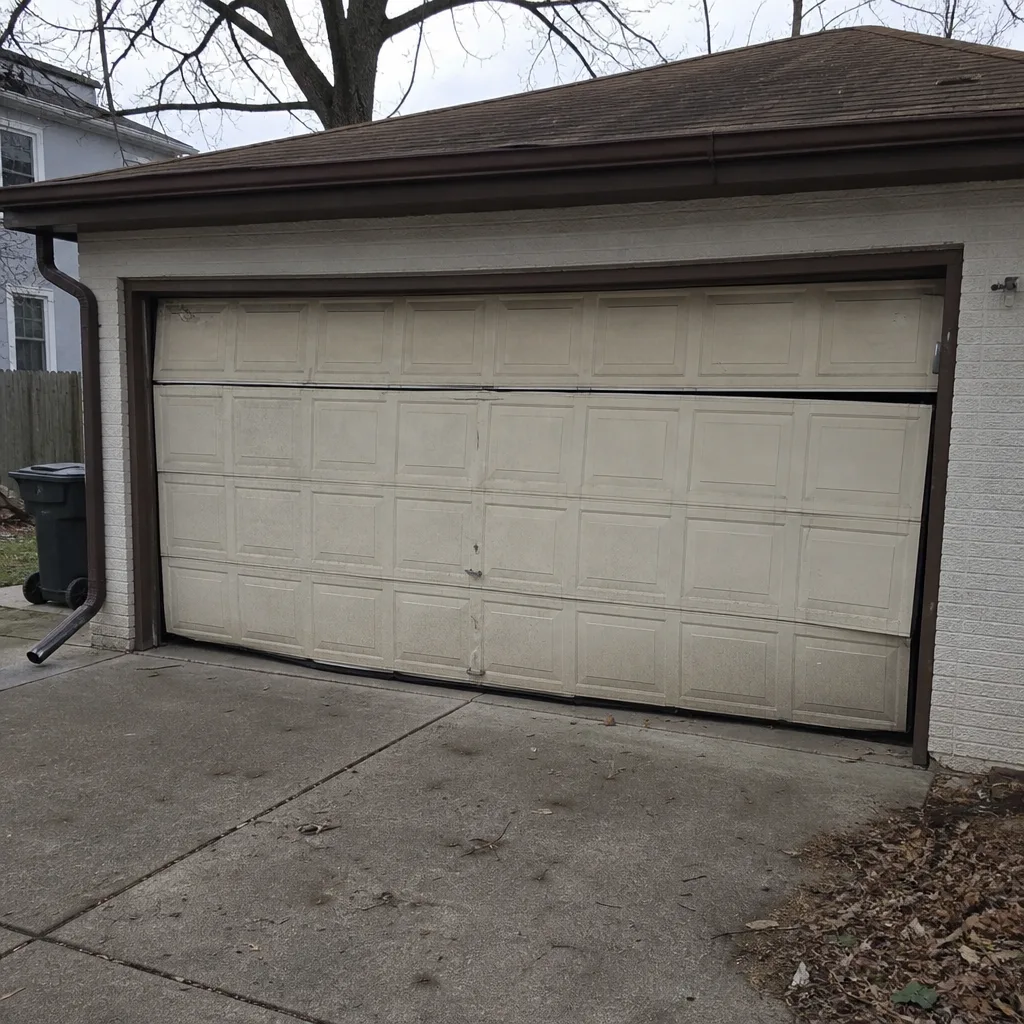 Before
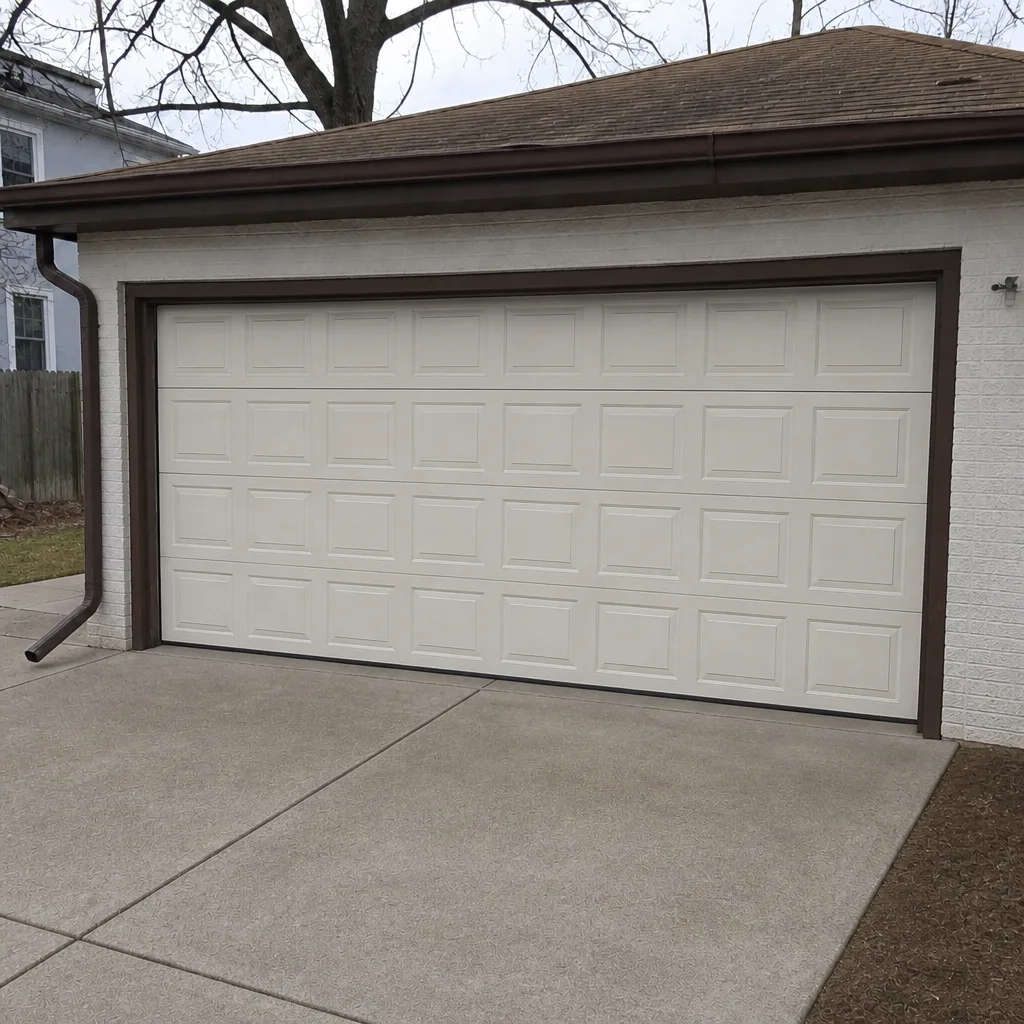 After
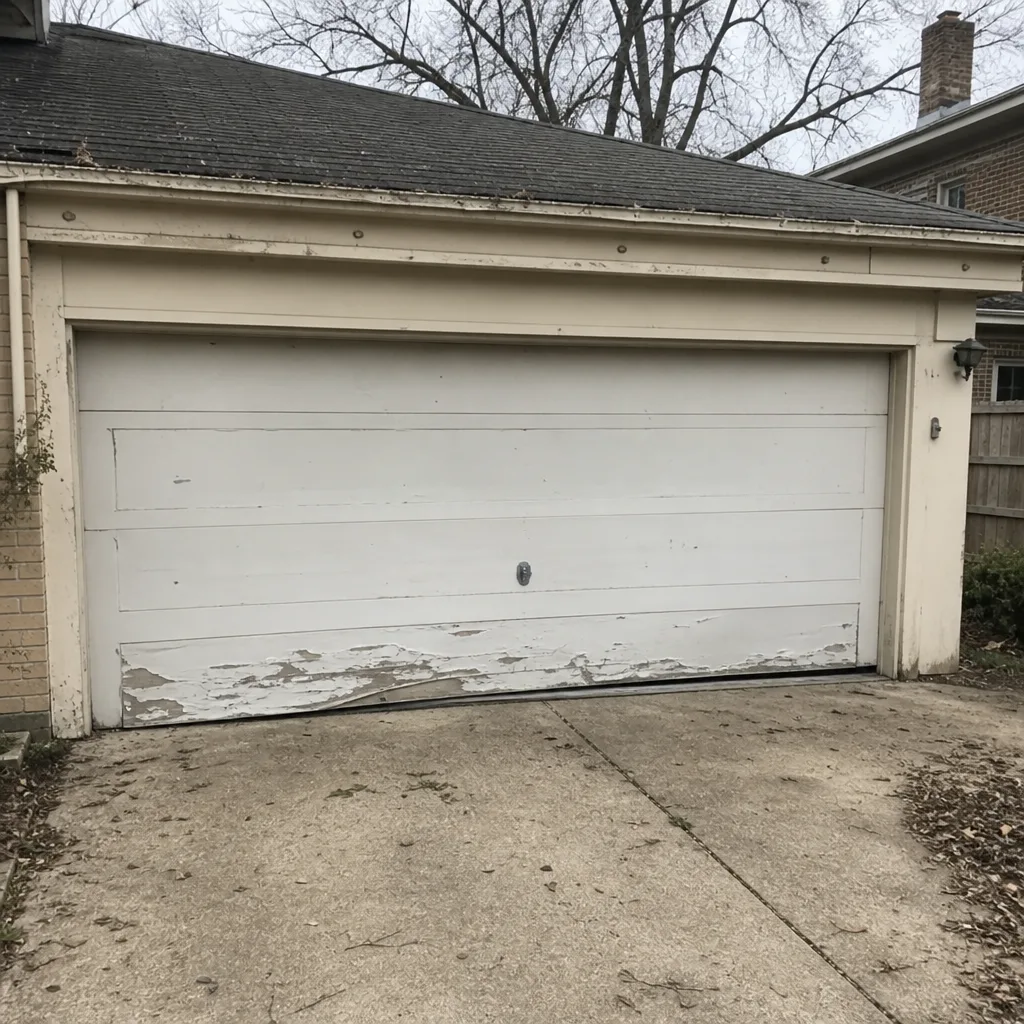 Before
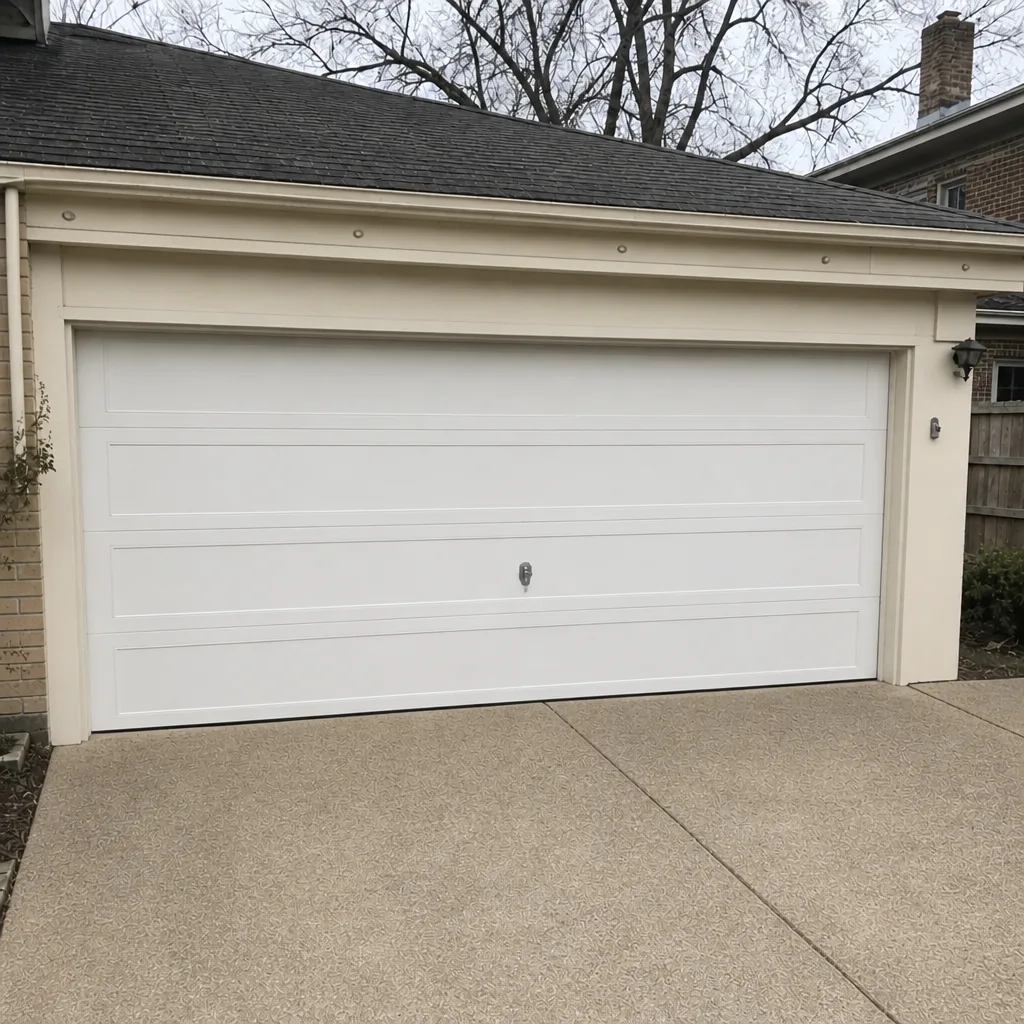 After
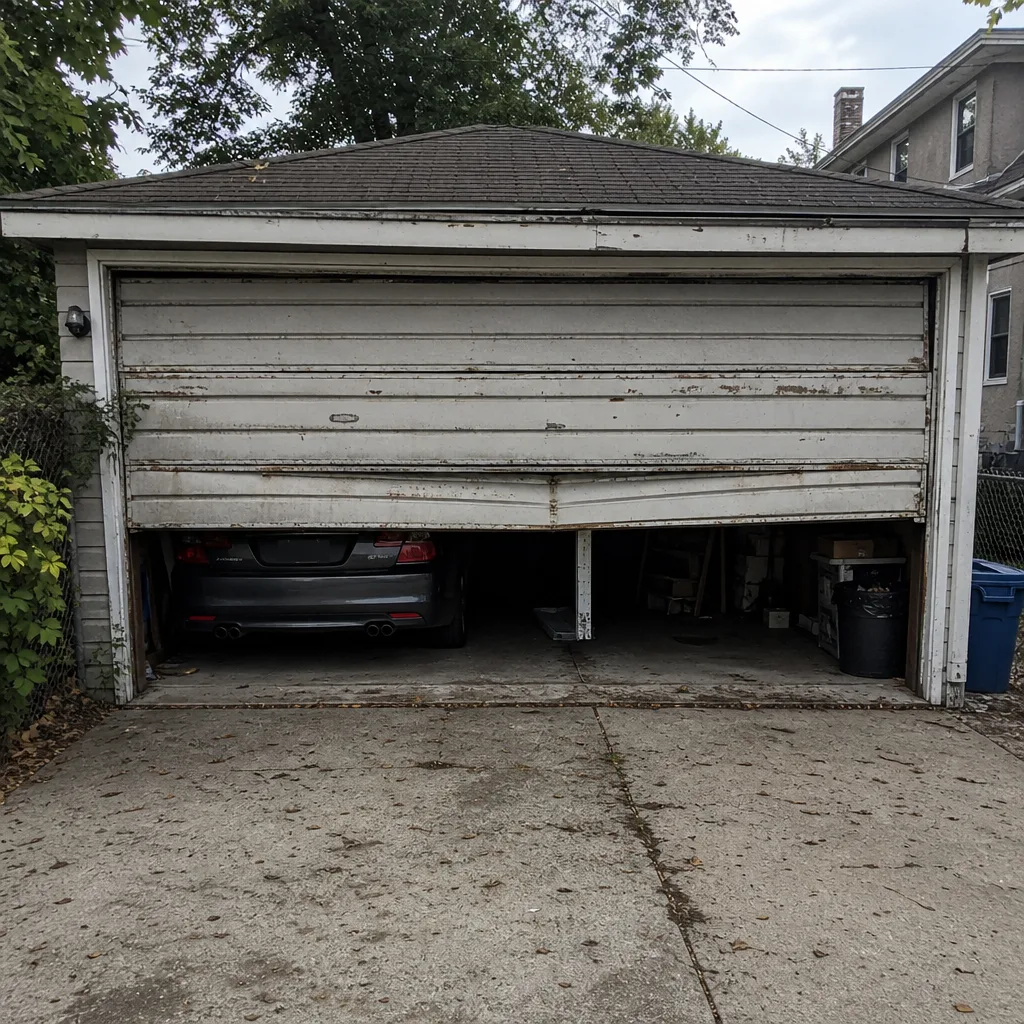 Before
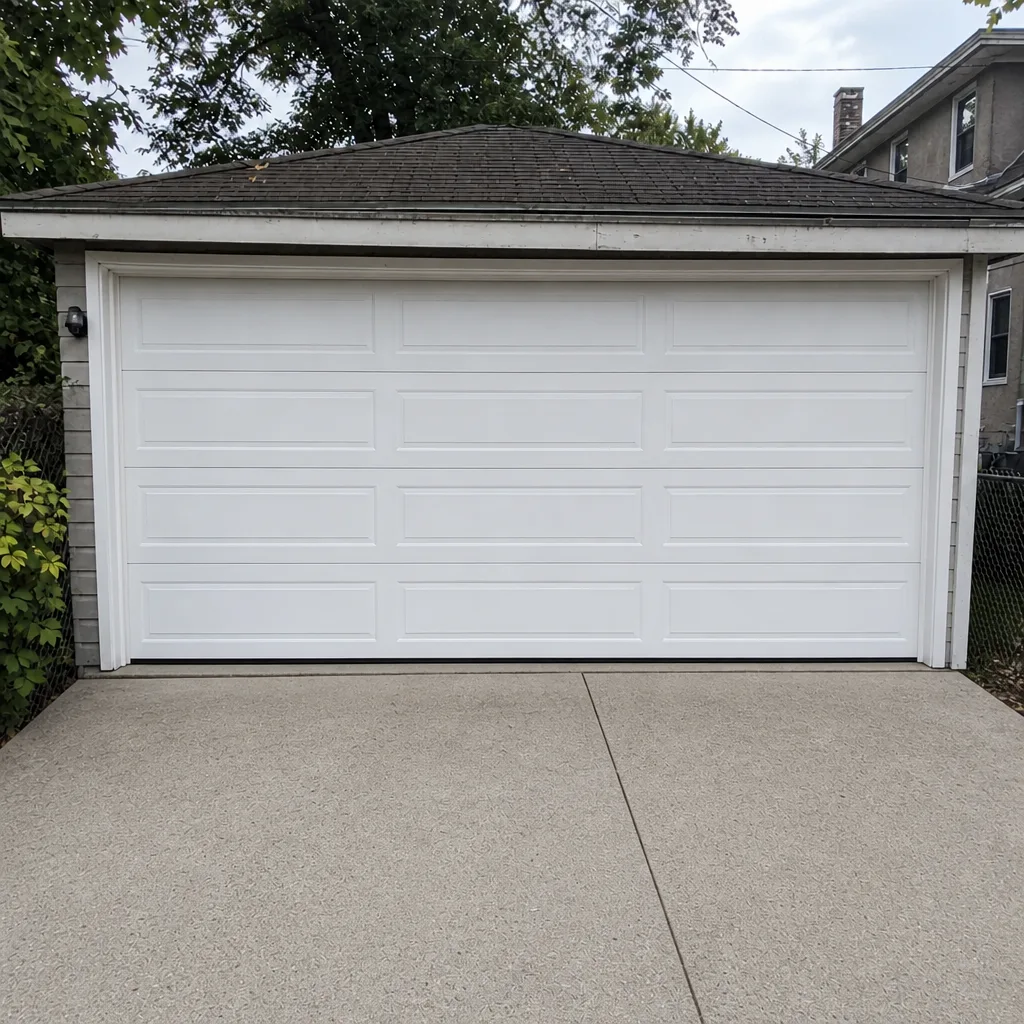 After
When to Call a Professional
Call a professional today if any of these are true: a spring has snapped or made a loud bang, a cable is visibly frayed or off its drum, the door hangs crooked or binds in one track, the opener hums but the door doesn’t move, the door reverses without an obstruction after a sensor clean, or the door drops hard and fast. Each of these has a real safety dimension, not just a convenience one.
You can typically schedule within the week if the signs are slower: minor grinding, an opener that hesitates, a remote that only works up close, or a door that’s been steadily getting louder over months. These deserve attention but not panic.
The distinction matters because Evanston Garage Door Repair Pros offers free estimates in Evanston – call (855) 305-8770. We answer 24/7. Fast dispatch from 7am to 7pm, Sunday through Friday. From opener diagnostics to full door replacement, one call covers it all.
Frequently Asked Questions
A loud bang from above the door followed by a door that won’t lift. That’s a snapped torsion spring, and the door should not be operated until a technician has looked at it. Call (855) 305-8770 for an exact quote – estimates are free.
Pull the red emergency release handle and try to lift the door by hand. If it lifts easily, the problem is in the opener; if it’s heavy, the springs are the culprit. This one test saves more scheduling confusion than any other diagnostic. Call (855) 305-8770 if you’re unsure.
No – spring repair is not a safe DIY project. Torsion and extension springs store hundreds of pounds of tension, and a slip during winding or replacement can cause severe injury. This is a job for trained technicians with proper tooling.
Probably not immediately, but plan a tune-up. Evanston freeze-thaw cycles drive lubricant out of rollers and hinges, and the squeal is usually a sign the door needs fresh lubrication and a balance check before the spring season. If lubricating doesn’t quiet it, the underlying cause is wear.
A door that’s slowly getting heavier to lift by hand. It doesn’t announce itself as a spring problem because the door still opens – it just takes more effort. That’s a spring losing tension, and if it’s left alone, the snap comes eventually. Call (855) 305-8770 if your door has been gradually harder to lift.
If you see one or two broken outer strands, schedule replacement within a month. If you see multiple broken strands, a fuzzy or twisted cable, or a cable off its drum, stop operating the door. Call (855) 305-8770 to book a service visit.
The Bottom Line
Every garage door warning sign maps to a component, and every component carries its own urgency. A snapped spring or a cable off its drum is a today problem. A grinding roller or a hesitant opener is a this-week problem. A door that’s slowly gotten heavier is a this-month problem. Read the sign, name the component, and you’ll know what kind of call to make.
We work on the brand already in your garage – LiftMaster, Chamberlain, Genie, Clopay, Amarr, Wayne Dalton, and others – and our technicians have up to 15 years of experience reading exactly these signals on Evanston doors. From a snapped spring to a smart-connected opener that’s given up, one call handles it.
Call (855) 305-8770 for a free estimate. We answer 24/7. Fast dispatch from 7am to 7pm, Sunday through Friday. Visit Evanston Garage Door Repair Pros to see the full range of what we handle.
Written by the team at Evanston Garage Door Repair Pros.